Abacus vs calculator: why a skill in the head still matters
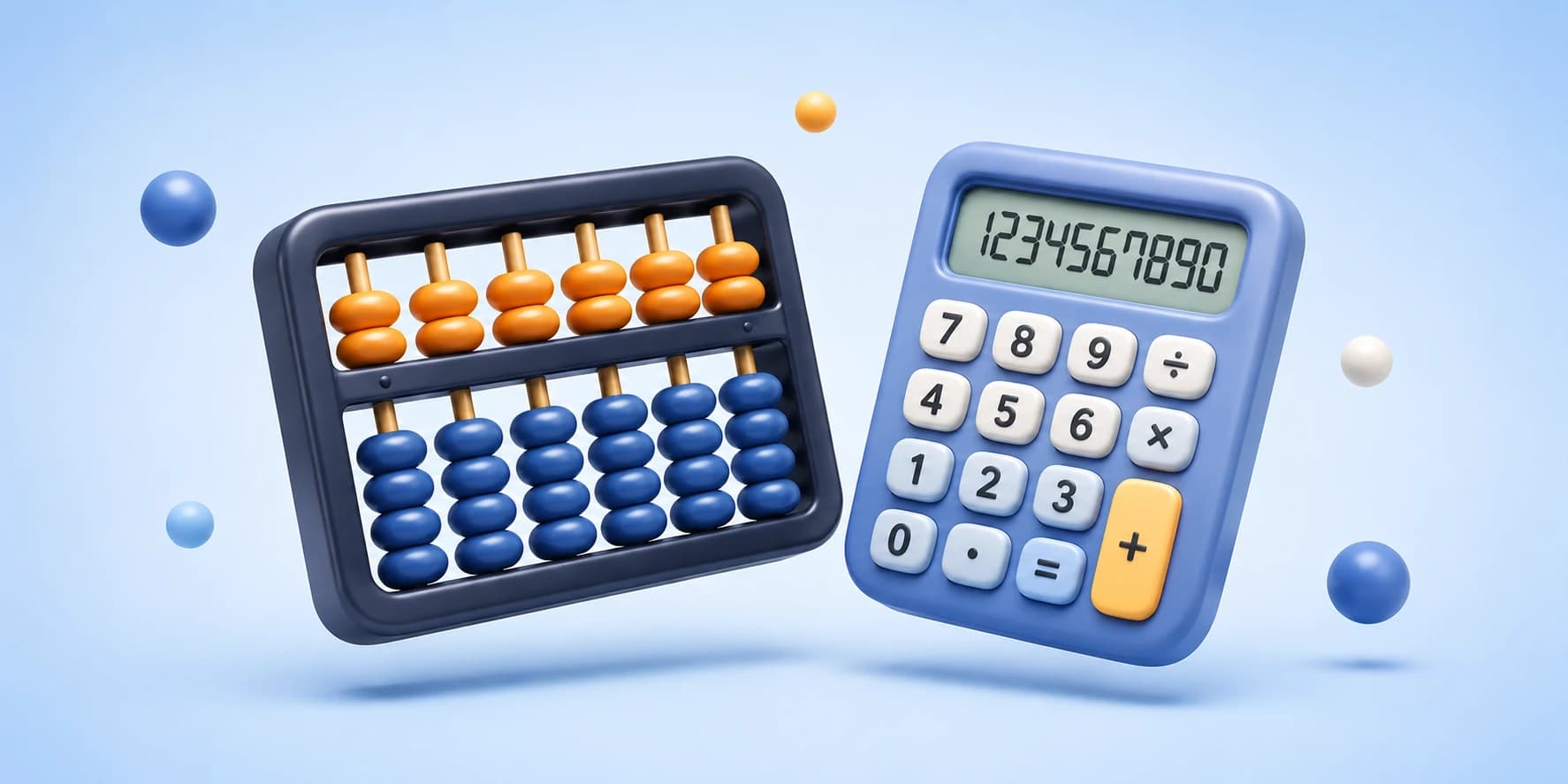
It's a reasonable thing to wonder. Every phone has a calculator; every adult carries one in their pocket. So why spend months teaching a child to add and subtract in their head?
It's a fair challenge, and the honest answer isn't "calculators are bad." They're wonderful tools. The point of mental arithmetic isn't to compete with them — it's to build something a calculator can't give.
A calculator gives the answer; the mind builds the sense
Press the buttons and a calculator returns a number. It's fast and correct — but it's a black box. The child learns nothing about why the answer is what it is.
Working it out in the head is different. To calculate mentally, a child has to actually understand how numbers come apart and fit back together. Over time this builds number sense — an intuitive feel for size, for whether an answer is roughly right, for what's happening underneath. That feel is what tells an adult, at a glance, that a receipt total looks wrong. A calculator never builds it; practice does.
The calculator hands over the result. The mind that did the work understands it.
A skill that's always with you
A device can run out of battery, be left at home, or simply not be appropriate to pull out. The ability to work something out in your head is always available and always instant — no unlocking, no typing, no app.
For a child, that quiet self-reliance is worth a lot: they don't feel stuck the moment a tool isn't at hand.
Quiet focus in a world of screens
There's another, gentler benefit. Most of the things competing for a child's attention today are loud, fast, and on a screen. Mental arithmetic is the opposite: a few calm minutes of focused, screen-free effort.
That's not a small thing. A daily habit that asks a child to sit, concentrate, and think — without a glowing display or a notification — is a rare and useful counterweight.
It isn't calculator versus child
It's worth saying plainly: this isn't a fight. As children grow, calculators and computers become essential, and no sensible programme pretends otherwise.
The two simply do different jobs. A calculator is for getting answers efficiently once you understand the maths. Mental arithmetic is for building the understanding in the first place — and the confidence that comes with it. A child who has both is better off than a child who only ever reaches for the device.
What you're really giving them
So the honest case isn't that mental arithmetic beats the calculator. It's that the two aren't the same thing at all.
The calculator gives your child answers. The practice gives them number sense, a skill that's always with them, and a bit of daily calm focus. Tools will keep changing; the habit of understanding numbers — and trusting your own head to work them out — is worth keeping whatever device is in your pocket.