How to Get Abacus Students to Practice at Home Consistently
Regular home practice is one of the most important parts of learning mental arithmetic.
One or two lessons with a teacher each week are usually not enough for a child to develop speed, confidence, and automaticity. During a lesson, the teacher introduces new techniques, explains how to work with the abacus, corrects mistakes, and monitors the student’s technique.
But automatic skills are built between lessons — through regular repetition.
This is where one of the biggest challenges for teachers begins. The child knows they should practice at home. The parents know it. The teacher assigns homework. Yet the practice often becomes irregular.
Why does this happen, and how can teachers make home practice a natural part of learning?
Why Regular Practice Matters So Much in Mental Arithmetic
Mental arithmetic is different from subjects where a student can simply understand a rule, apply it several times, and move on.
A child needs to repeat similar actions many times until they gradually become automatic.
First, the student learns to move the beads correctly on a physical abacus. Then they become faster. Later, they begin to move toward an imaginary abacus and eventually mental calculation.
Every stage requires a significant amount of practice.
If a child practices only during lessons, too much time may pass between training sessions. The skill does not become stable, speed develops slowly, and the teacher may have to spend the next lesson reviewing material that has already been covered.
In mental arithmetic, short and regular practice is usually much more valuable than occasional long sessions.
Why Children Do Not Always Want to Do Their Homework
The problem is not necessarily laziness.
Imagine a typical homework assignment. The teacher sends a WhatsApp message to the parent or student:
“Page 34, exercises 1–6.”
The child opens the workbook and sees dozens of similar examples. Today. Tomorrow. Next week.
Repetition is necessary for building skills. But from the child’s perspective, it can quickly become monotonous.
This is especially true when there is no immediate feedback. The child solves 50 examples — and nothing happens.
- Were the answers correct? They may find out later.
- Did their speed improve? They do not know.
- Are they better than they were last week? That may not be visible either.
For the child, it becomes simply another page of homework.
The goal, therefore, is not to remove repetition. Repetition is essential. The goal is to make necessary practice more varied, visible, and meaningful.
Workbooks and Physical Learning Materials Still Matter
A digital platform should not replace all traditional teaching tools.
Especially at the beginning of learning, workbooks remain extremely important.
When a child is learning a new topic, they need time to solve examples carefully, see the numbers in front of them, control their movements on the abacus, and gradually build correct technique.
That is why workbooks and worksheets continue to play an important role.
The same applies to physical flash cards used by teachers during lessons.
Flash cards are excellent for training number recognition, switching attention quickly, and controlling the pace of the exercise. The teacher can show cards at different speeds and immediately observe how the student responds.
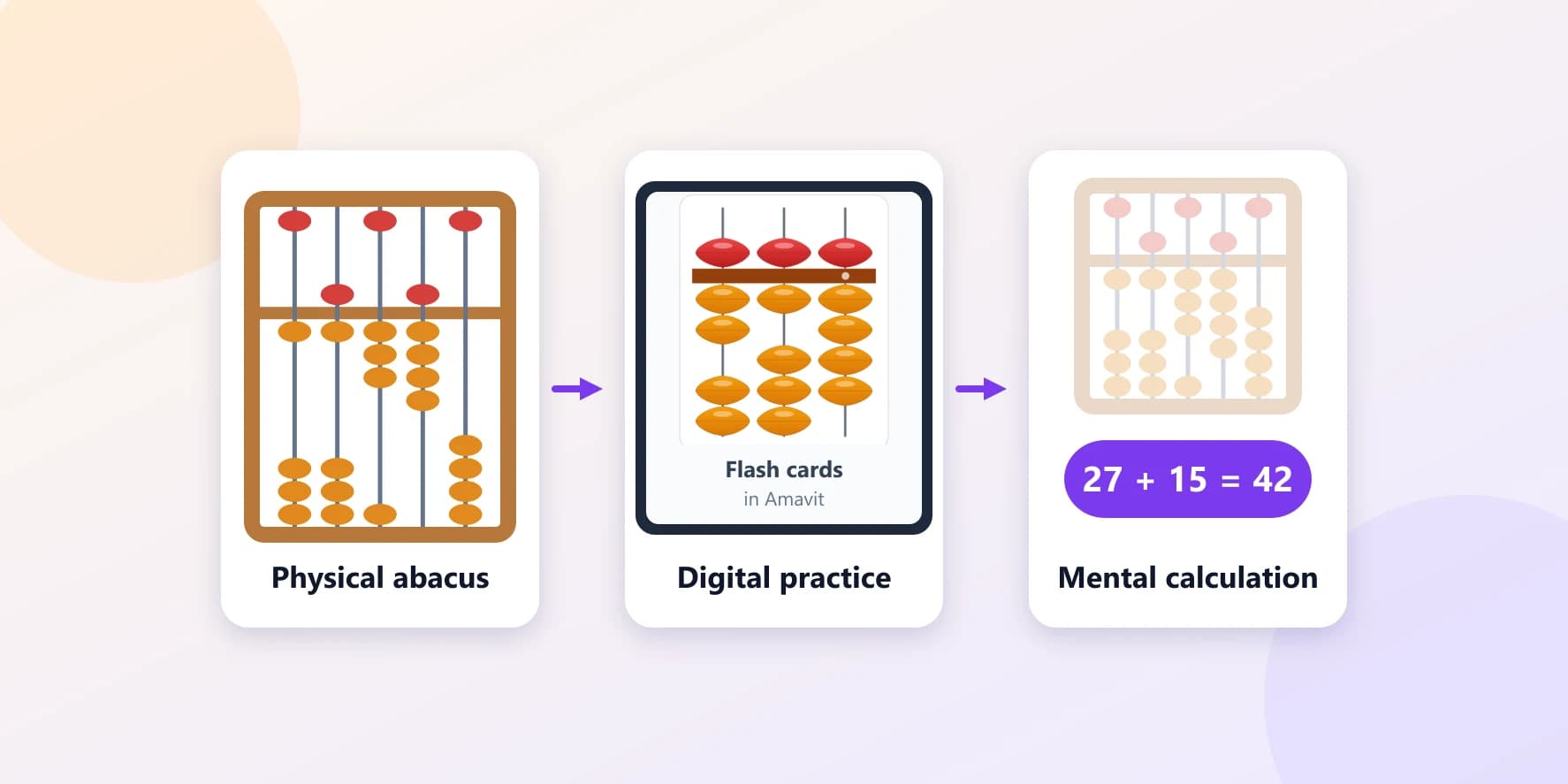
But this type of practice can also continue at home. A teacher may work with physical flash cards during the lesson, while the child practices similar exercises later using digital flash cards on the platform.
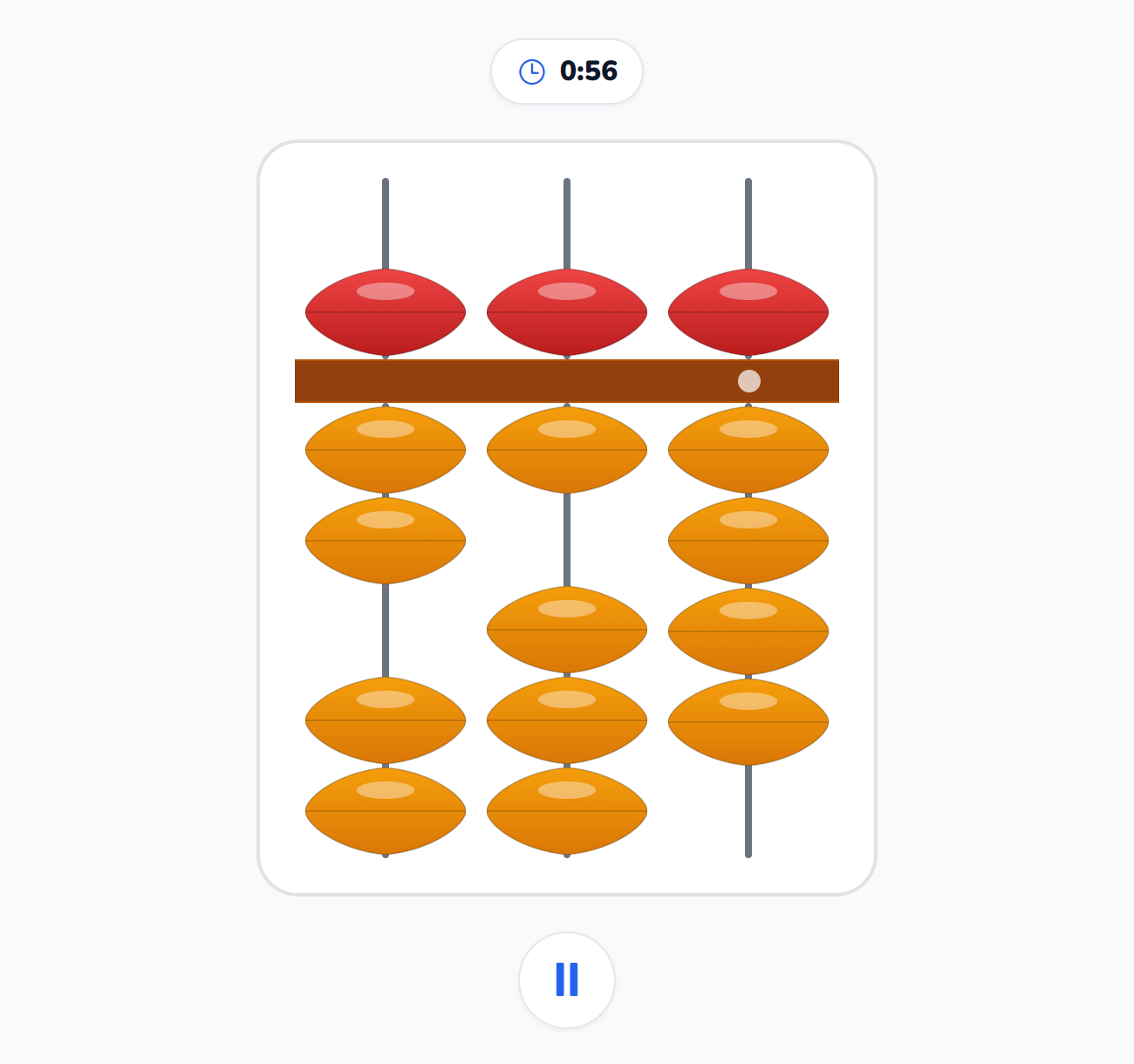
This creates a natural connection:
workbook exercises during learning → number practice on the platform at home
and physical flash cards during the lesson → digital flash cards between lessons.
Digital tools do not replace the teacher’s methodology. They extend it beyond the classroom.
This matters because the child is not being asked to learn an entirely different way of practicing at home. They are reinforcing the same skills that were introduced during the lesson.
Home Practice Should Change as the Child Progresses
At the beginning of training, a large part of homework may consist of workbook exercises and practice with a physical abacus.
Later, the teacher can gradually introduce digital activities such as virtual abacus exercises, number sequences, digital flash cards, listening exercises, speed training, mental calculation, and educational games.
As the student progresses, the balance between these formats changes — we look at this in more detail in Abacus Worksheets vs Digital Practice.
When the child begins moving from the physical abacus toward the imaginary abacus and mental calculation, digital practice becomes especially useful.
One important reason is speed.
- At the beginning, numbers may appear with relatively long intervals between them.
- Once the child can solve the exercise confidently, the interval can gradually be reduced.
- The student learns to maintain accuracy while processing numbers faster and faster.
This type of controlled speed training is extremely difficult to reproduce with a workbook alone.
That is why workbooks, physical abacus practice, flash cards, and digital tools should not be viewed as competing methods.
Each one solves a different problem at a different stage of learning.
Children Need Immediate Feedback
One of the biggest advantages of digital practice is immediate feedback.
A child finishes an exercise and immediately sees the result. For example:
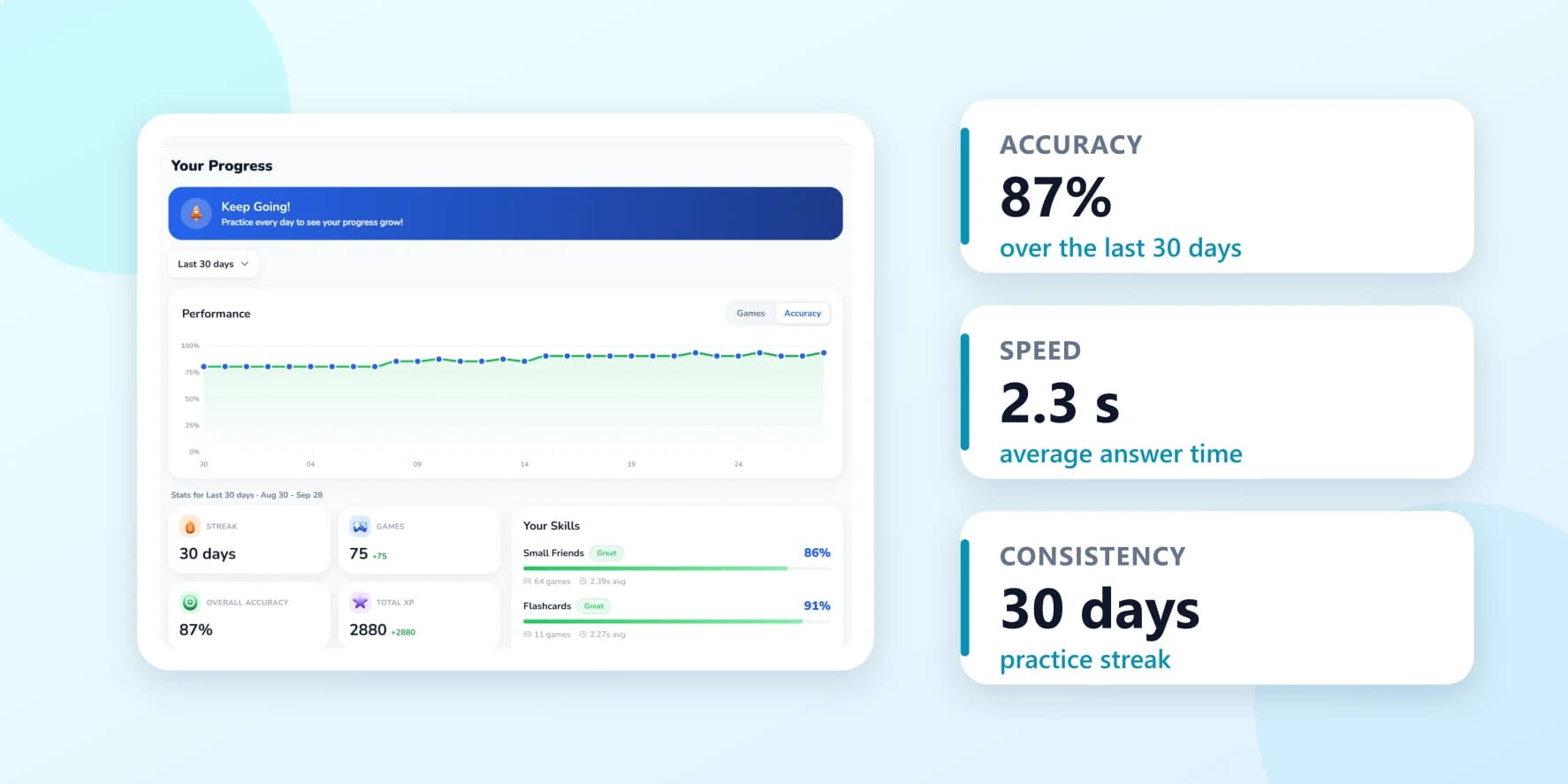
Accuracy: 92%
or 18 correct answers out of 20.
This may look like a small detail, but it changes how a child experiences practice.
The student is no longer simply “solving more examples.” They begin to see their own performance.
- Today: 85%.
- Tomorrow: 91%.
- A few days later: 96%.
Now there is a clear goal: improve your own result.
Speed Should Also Become Part of Visible Progress
Accuracy is only one part of mental arithmetic. The second is speed.
Children therefore benefit from seeing not only whether they made mistakes, but also how their performance is developing over time.
- Can I complete the same type of exercise faster?
- Can I maintain my accuracy at a higher speed?
- Can I move to the next level?
Practice gradually becomes a small competition with oneself.
That is often much more engaging than simply being told:
“Complete one more page.”
Small Motivation Elements Help Build a Habit
Visible progress is important, but it is not always enough.
For younger children in particular, a long-term goal such as “If you practice regularly for several months, your mental calculation will become much faster” can feel very distant.
That is why small intermediate goals and rewards can be useful.
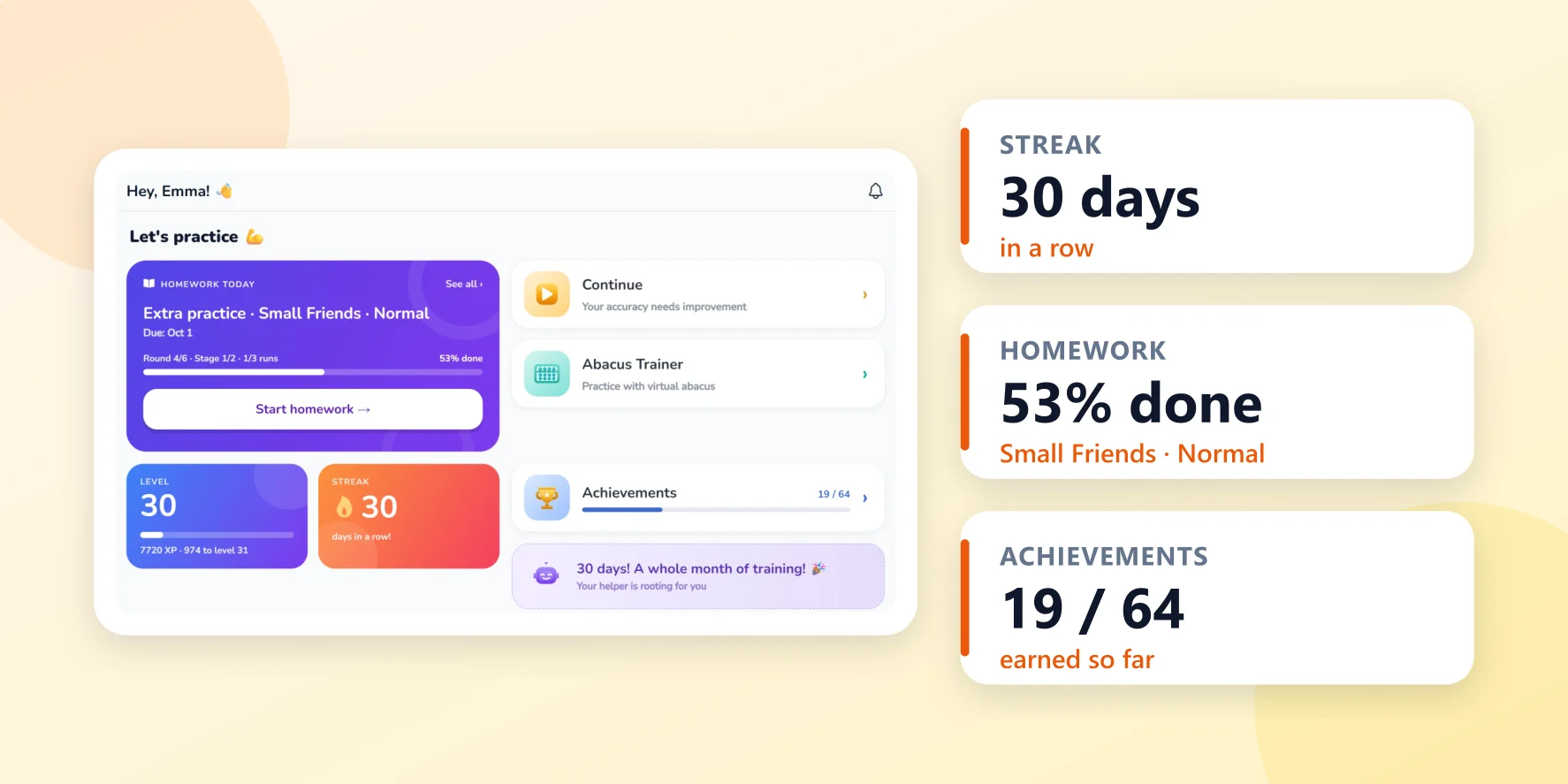
In Amavit, we use a wider motivation system that includes achievements, medals, levels, leagues, chests, and other elements of progress.
There is also a streak system. When a child returns regularly and completes at least some practice, their streak continues.

This is particularly relevant in mental arithmetic because consistency matters so much. A child who practices for 10–15 minutes regularly may benefit more than a child who completes one very large homework session and then does nothing for several days.
This is where small motivational “hooks” can help.
- One day, the child extends their streak.
- Another day, they earn an achievement.
- Then they open a chest.
- They move to a new level.
- They receive HP or another reward.
- They see their position in a league or notice how other students are progressing.
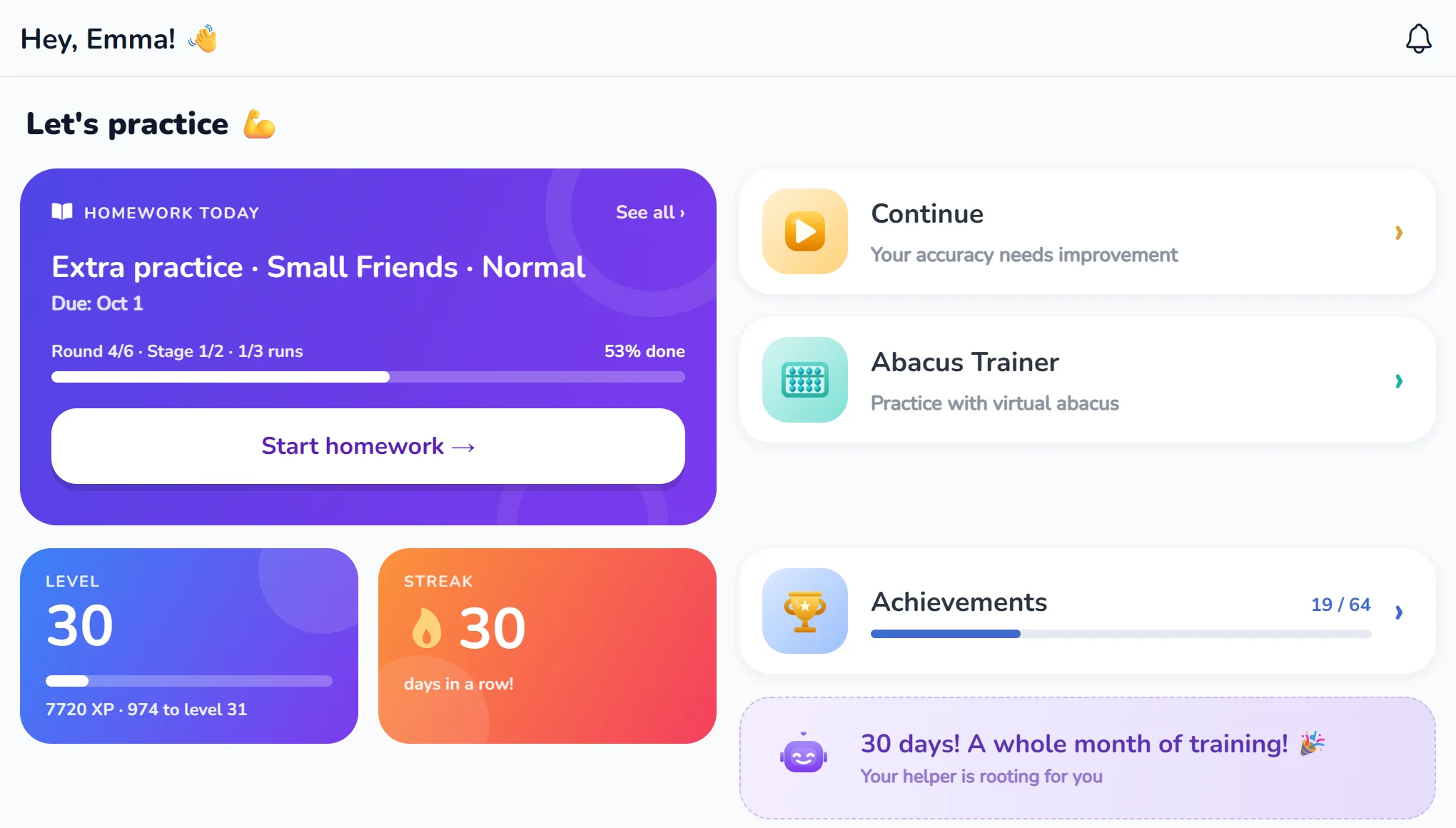
Each individual element is small. Together, however, they give the child another reason to come back tomorrow.
They do not force the child to practice. They simply make continuing a little more rewarding.
Gamification Should Support Learning, Not Replace It
An educational platform should not become just another game.
The child should not open the app only to collect a chest, medal, or virtual reward. Every motivational element should support the educational objective.
- A streak encourages consistency.
- Levels make development visible.
- Medals and achievements mark milestones.
- Leagues introduce a controlled element of competition.
- Chests and small rewards add anticipation to the next practice session.
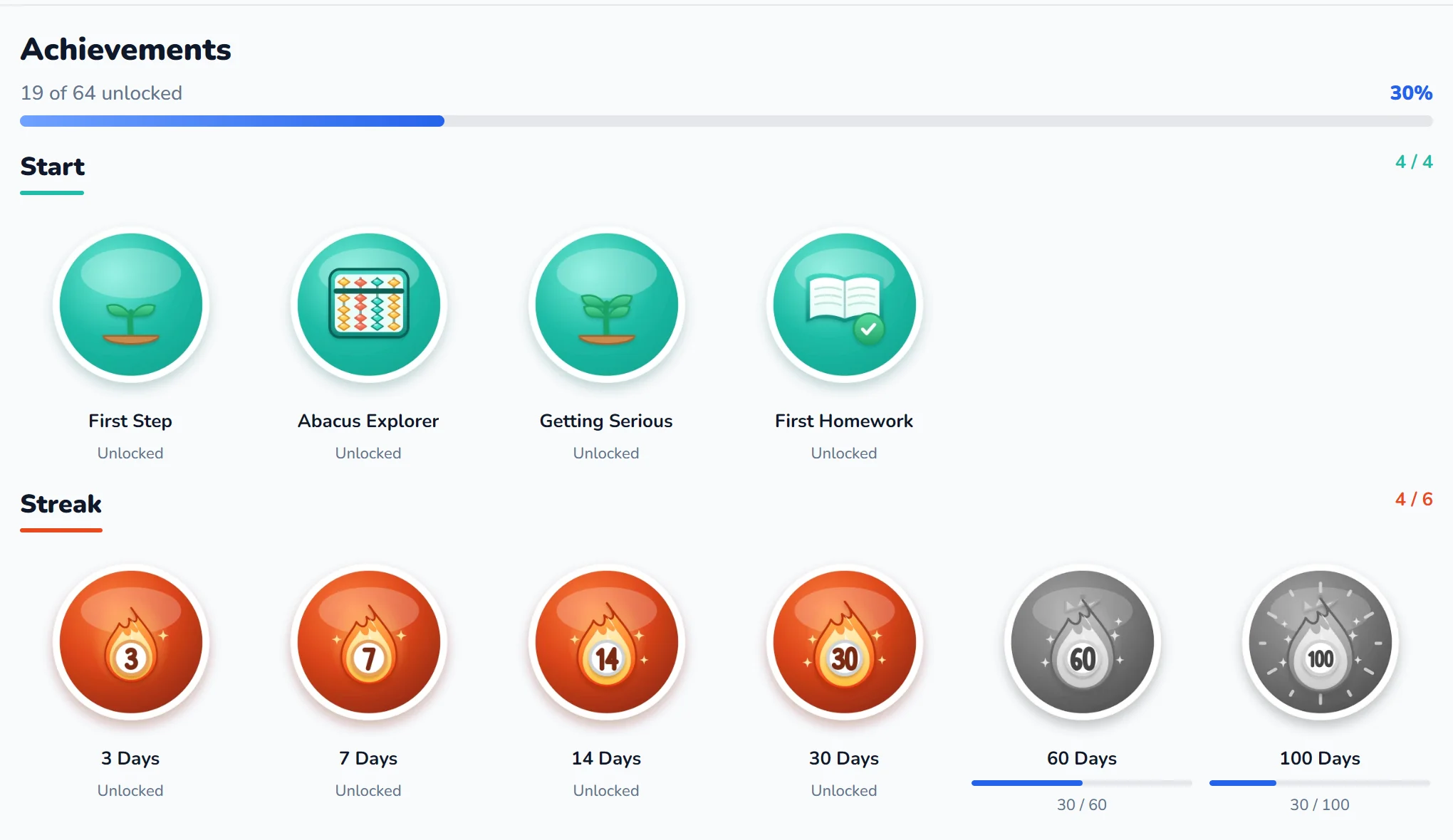
The game mechanics are not the learning itself.
Their job is to help children complete the repetition that is necessary to build a real skill.
Homework Does Not Have to Be Large
A common mistake is trying to compensate for irregular practice by assigning more homework.
When children receive too many exercises, they may become even less likely to start. This is particularly true for younger students.
A more effective approach is often to build a simple habit:
practice a little every day, or almost every day.
For one student, this may mean a short training session. Another student may be ready for a longer assignment. The teacher should consider the child’s age, current level, and working speed.
The goal is not to complete the maximum number of examples in one evening. The goal is consistency.
Teachers Need to Know What Happens Between Lessons
Regular digital practice is valuable not only for students. It gives the teacher much more information.
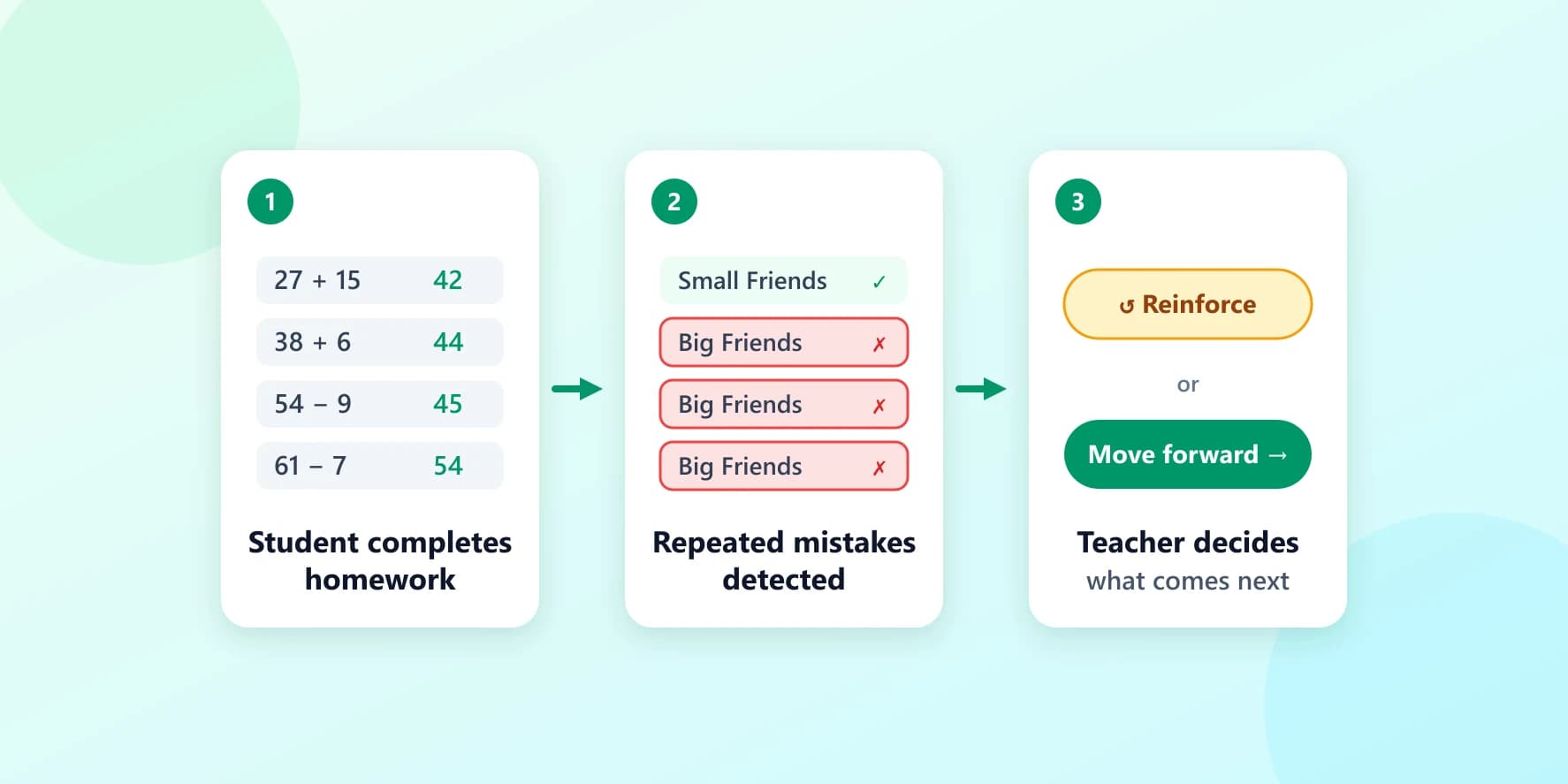
When a teacher receives only a completed workbook, they can see the final answers. A digital system can provide a much clearer picture of what happened between lessons.
The teacher can understand whether the child practiced regularly, what types of exercises were completed, where mistakes appeared, how accuracy changed, how speed developed, and whether progress was consistent.
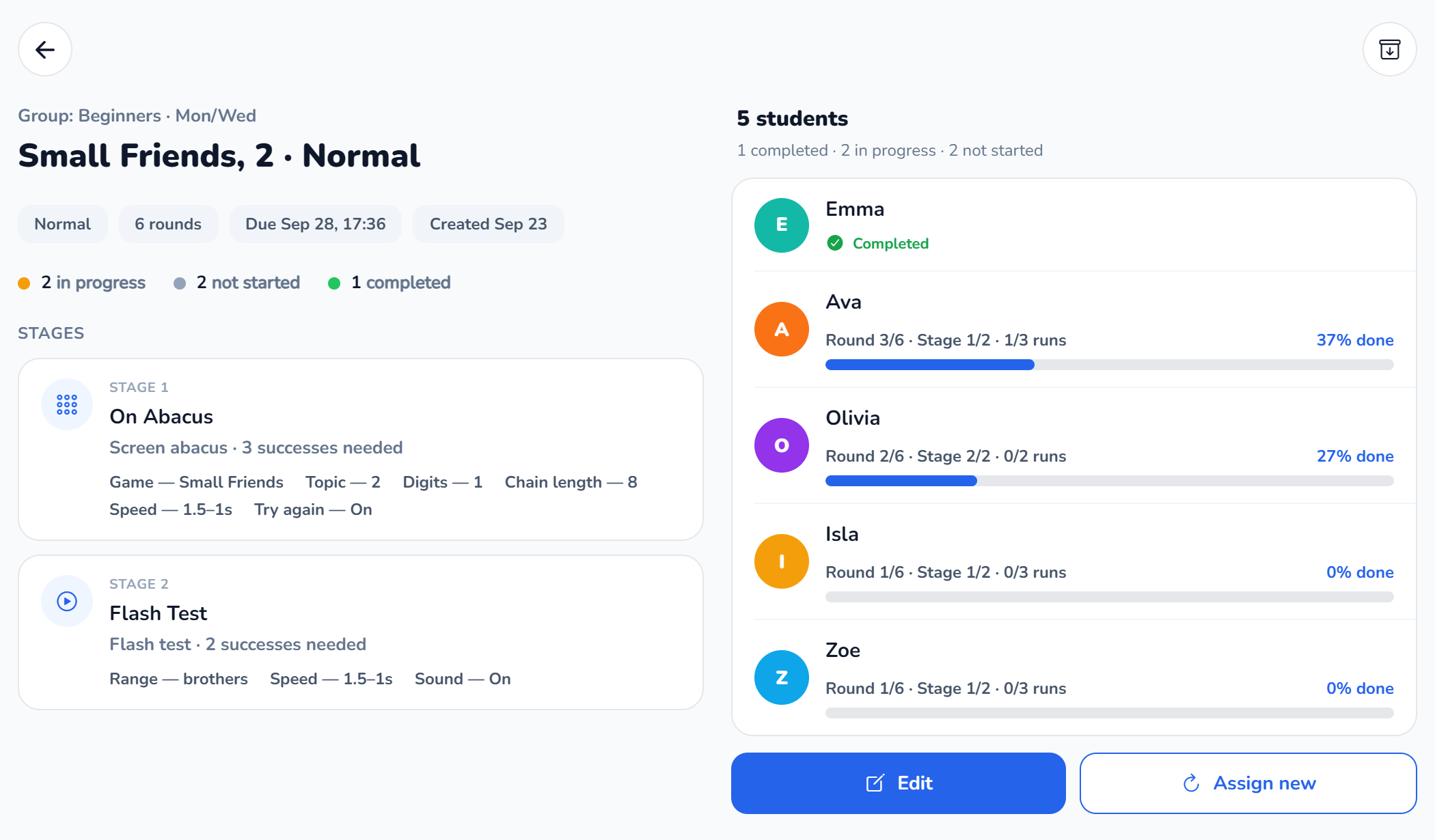
This allows the next lesson to be planned with much more information.
If the student is doing well, the teacher can move forward.
If a problem appears, it can be identified earlier.
Which indicators to watch — accuracy, speed and practice consistency — is covered in How to Track Student Progress in Abacus Classes.
Parents Also Need to Understand Their Child’s Progress
Parents are another important part of the learning process.
For a parent, it can be difficult to evaluate mental arithmetic training. They may see that their child spent twenty minutes with a workbook but still have no clear answer to important questions.
- Did the child practice well?
- Are they becoming faster?
- How many mistakes are they making?
- Are they practicing regularly?
- Is there real progress?
Simple progress information can therefore be very useful for parents.
They do not need to understand every methodological detail. They simply need to see that the child is practicing consistently and gradually improving.
How We Approach This in Amavit
When we created Amavit, we started with a simple principle: teachers should not have to abandon their own methodology, materials, or workbooks.
- If a teacher uses a workbook, they can continue using it.
- If they use a physical abacus and flash cards during lessons, those tools remain part of the learning process.
The digital platform simply continues that work between lessons.
Teachers can create assignments for an individual student or a group, combine different types of exercises, and see the results after the work is completed.
The child receives not only exercises but also a visible progress system with levels, achievements, streaks, leagues, and small rewards that help maintain interest in regular practice.
The purpose of Amavit is not to replace the teacher. It is not to replace the workbook. And it is not to replace an existing teaching methodology.
The purpose of the platform is to connect these elements and make practice between lessons more regular, varied, measurable, and engaging.
The Real Goal Is to Turn Practice Into a Habit
Mental arithmetic requires a large amount of repetition. There is no way around that.
But repetition can be organized so that children do not experience every homework assignment as an endless list of similar examples.
- Workbooks provide essential written practice.
- The physical abacus develops correct technique.
- Flash cards train fast number recognition.
- Digital exercises extend this practice at home, make controlled speed training possible, and provide immediate feedback.
- And a well-designed motivation system helps children come back and practice again tomorrow.
When all of these elements work together, the result is not simply more homework.
It is a regular learning habit.
And regular practice is what gradually develops automaticity, speed, and the skill that children ultimately want from mental arithmetic: the ability to calculate quickly and confidently in their minds.
Want to make practice between lessons easier for your students?
Try Amavit free as a mental arithmetic teacher.
Start for Free