Can a Child Solve Two Mental Arithmetic Problems at the Same Time?
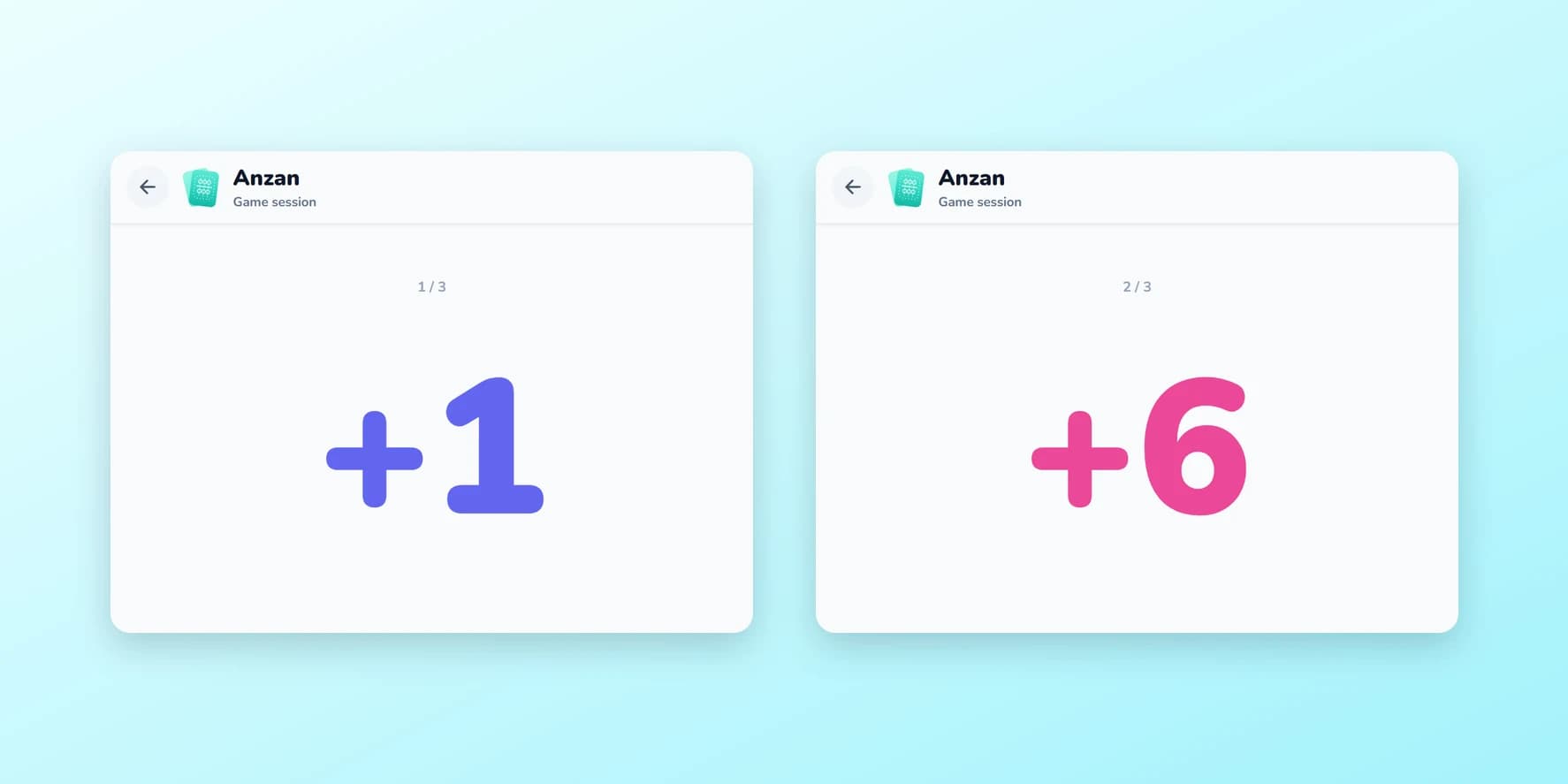
When people first see a child solving two independent mental arithmetic problems at the same time, it can look almost impossible.
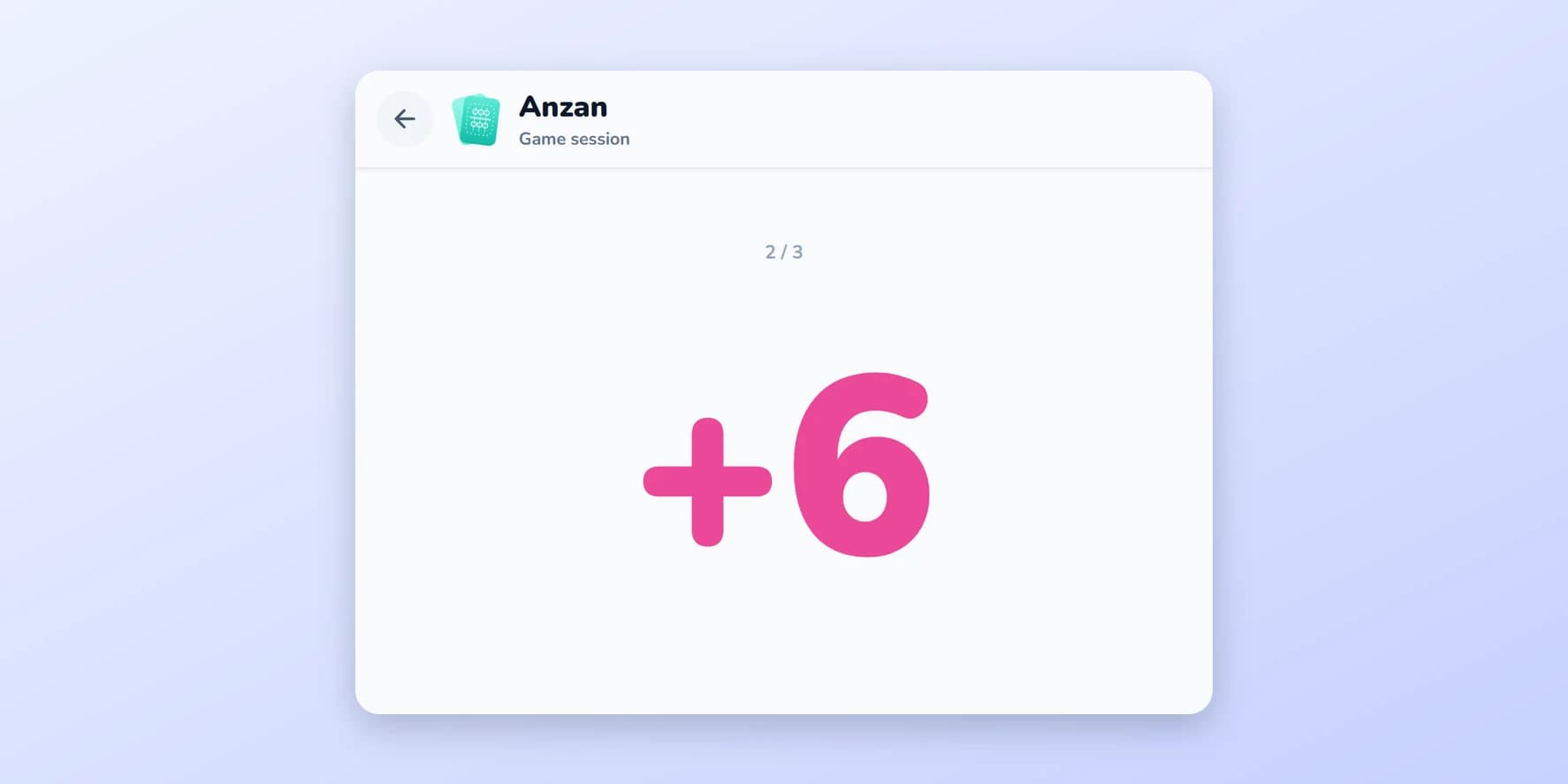
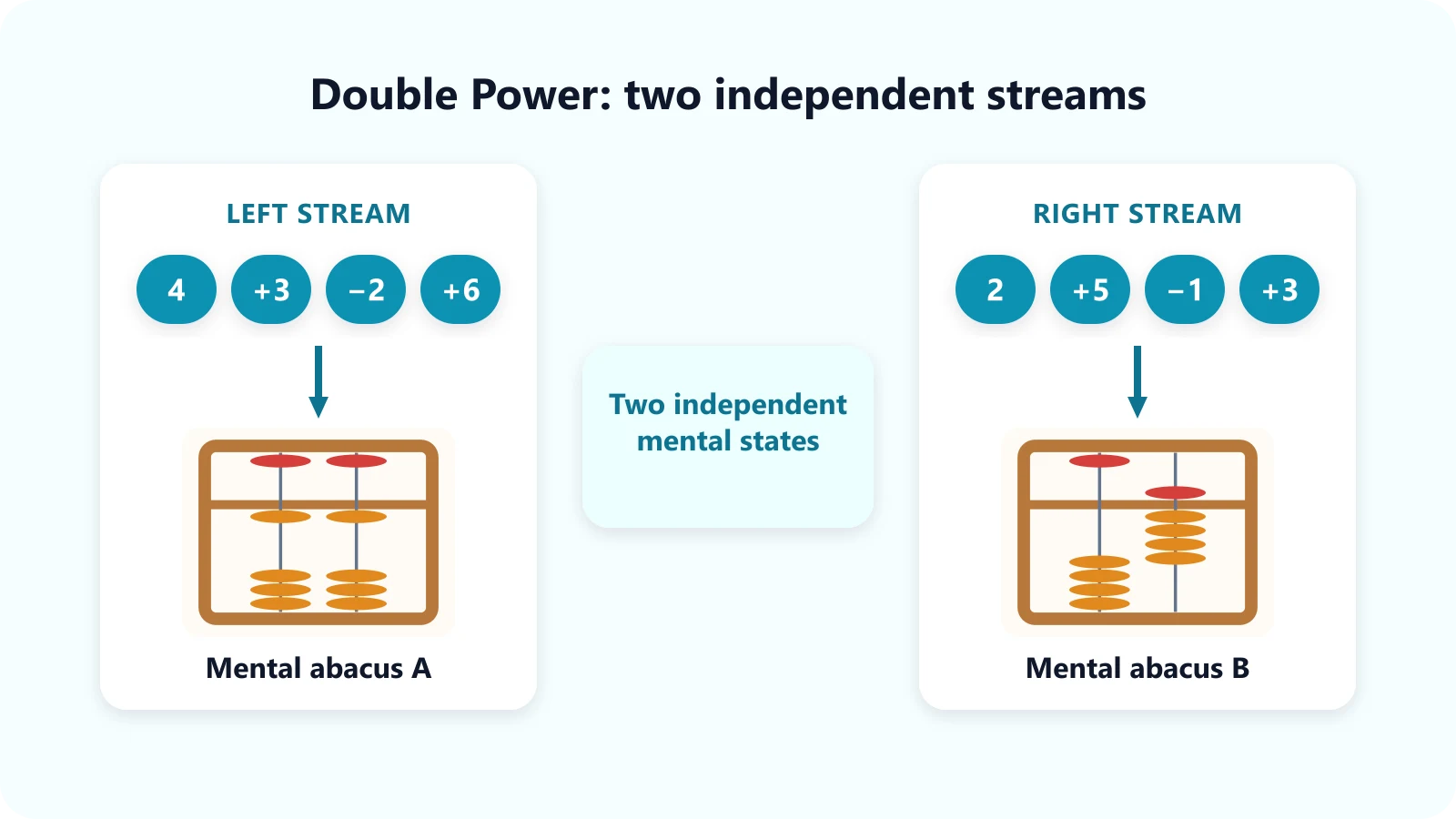
Two separate streams of numbers appear on the screen. One on the left. One on the right.
The child has to follow both streams, maintain two independent mental-abacus calculations and finally give two correct answers.
Even for someone who is already familiar with Anzan, this looks very different from ordinary mental calculation.
Maintaining one mental abacus is one thing.
Maintaining and updating two independent mental abacuses at the same time is another level entirely.
This challenge became the basis of a training mode developed in Ukraine within Smartum:
Double Power.
What is Double Power?
Double Power is an advanced mental-arithmetic training mode in which a child maintains two independent mental-abacus calculations at the same time. The concept was developed within Smartum in Ukraine and became possible as digital platforms made precisely controlled dual-stream training practical.
Where did the idea of Double Power come from?
Once mental arithmetic training was already well established, a practical question emerged:
What can we give an advanced child after ordinary mental calculation has already become familiar?
- Speed can always be increased.
- Digit length can be increased.
- Chains can become longer.
But we wanted another level of difficulty. Something that initially seemed almost impossible. Especially for strong students who needed a new goal.
That led to a simple question:
What if a child tried to solve not one mental-abacus problem, but two at the same time?
At the time, solving two independent mental-abacus streams was not a standard requirement in ordinary mental arithmetic programs.
Traditional programs focused on:
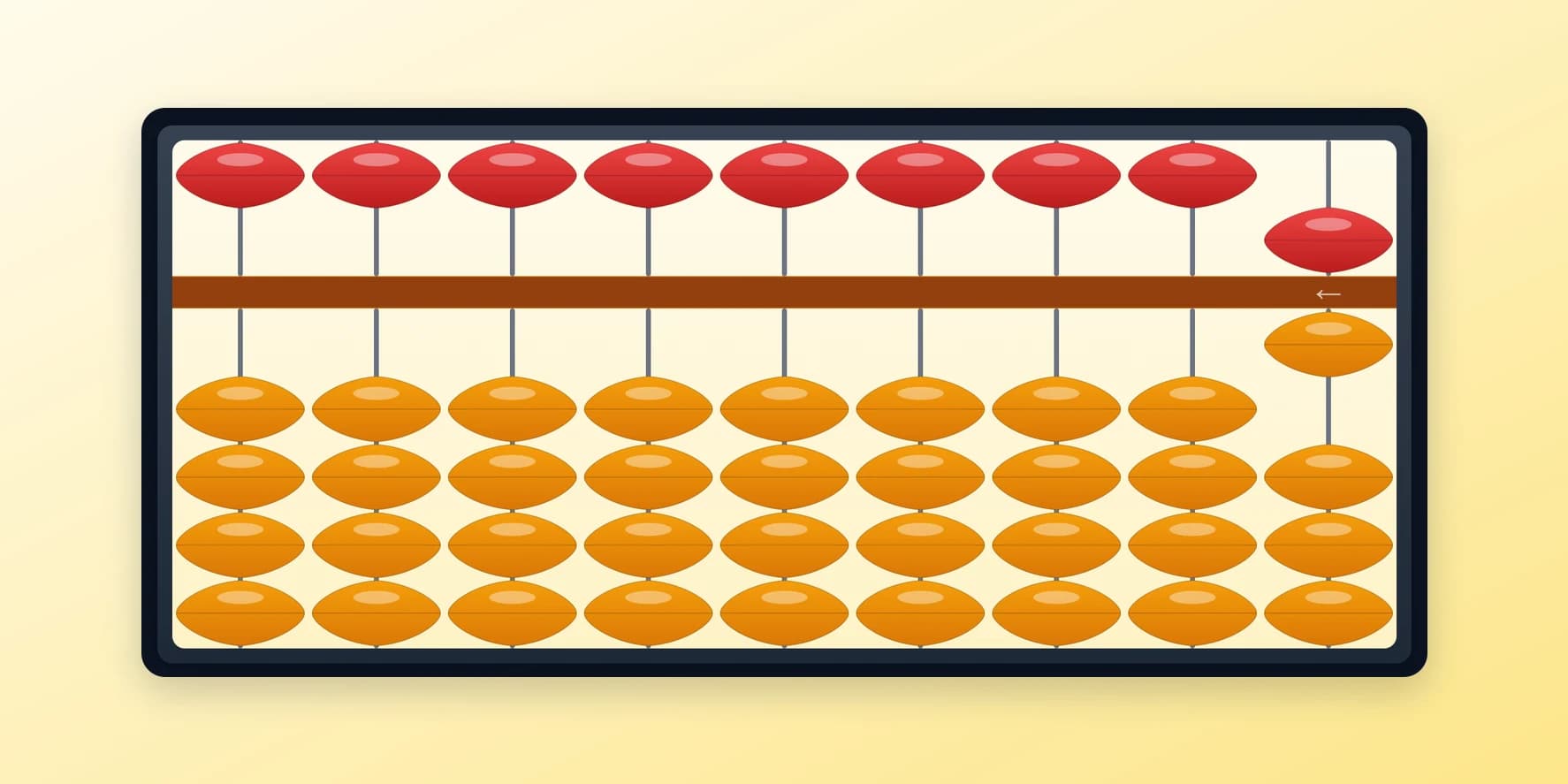
- physical abacus;
- mental calculation;
- Anzan;
- speed;
- digit length.
Within Smartum in Ukraine, the idea was developed into a separate advanced digital training mode. It became known as Double Power.
Smartum's own published materials already referred to Double Power as a platform mode in 2017, providing a useful historical record of its use within the methodology.
Why was this difficult to do before digital platforms?
It is easy to invent an extremely difficult exercise. It is much harder to make it trainable.
To solve two examples simultaneously, the child needs two precisely controlled streams of numbers.
The system needs to manage:
- two independent number sequences;
- presentation speed;
- chain length;
- digit length;
- timing;
- the moment each number appears.
A teacher can manage one stream manually. Two independent streams at high speed are much more difficult to present consistently.
When mental arithmetic depended mainly on:
- workbooks;
- flashcards;
- physical abacuses;
- manual presentation,
training two simultaneous streams was extremely difficult to organise systematically.
Digital platforms changed that.
For the first time, it became practical to create a repeatable exercise where two independent calculations could appear with controlled timing and difficulty.
Technology turned Double Power from an idea into a usable training mode.
Why create such a difficult task at all?
The original purpose was not to create a spectacular trick for parents.
The real goal was:
to give an advanced student another target to reach.
Children often respond remarkably well to new levels of difficulty. Especially when the first reaction is:
“That looks impossible.”
Ordinary mental calculation gradually becomes familiar.
- The child learns to calculate mentally.
- Then faster.
- Then with larger numbers.
But students who train for a long time need new goals — motivation is what keeps them training.
Double Power created exactly that kind of goal.
- First: Can I get two correct answers at all?
- Then: Can I handle a longer chain?
- Then: Can I do it faster?
- Then: Can I use larger numbers?
A highly advanced exercise became a source of motivation.
Children are often attracted to tasks that initially look impossible
This is something we have repeatedly observed in practice.
An adult sees two parallel calculations and thinks:
“There is no way I could do that.”
A child may react differently:
“Can I learn to do it?”
That question itself can become motivating.
And the first time the child gets both answers correct, the experience can be powerful.
Something that looked impossible yesterday has become possible today.
That creates a new reason to continue practising.
Double Power therefore became more than an advanced calculation exercise. It became another way of showing the student:
there is still another level ahead.
Double Power is not a required part of traditional mental arithmetic
This distinction matters.
A child does not need to solve two problems simultaneously in order to be good at mental arithmetic.
A strong standard program can already include:
- physical abacus;
- mental calculation;
- speed development;
- digit-length development;
- Anzan.
Double Power is an additional advanced level. It was created as a challenge beyond the standard curriculum.
A child who can calculate extremely well on one mental abacus but has never practised Double Power can still be an excellent mental arithmetic student.
Double Power is not a basic standard. It is an additional challenge.
First, one mental abacus must be extremely stable
Double Power should not be introduced too early.
Before attempting two streams, the child needs to work confidently with one mental abacus.
The student should be able to:
- visualise bead positions consistently;
- update them quickly;
- maintain the image through a chain;
- use Simple automatically;
- apply Small Friends and Big Friends automatically;
- handle transitions;
- calculate without constantly verbalising intermediate results.
If one mental abacus is still unstable, adding a second usually creates confusion rather than useful training.
That is why Double Power belongs to the advanced stage.
What happens during ordinary mental calculation?
Consider one chain:
4 + 3 − 2 + 6
- The child sees the first number.
- A bead configuration is formed mentally.
- The next number arrives.
- The mental abacus changes.
- Then another. Then another.
Throughout the sequence, the child maintains one continuously changing visual state.
The child does not necessarily need to consciously verbalise 7, then 5, then 11.
The mental-abacus image is updated instead. At the end, the final value is read.
What changes in Double Power?
Now imagine two independent chains.
On the left:
4 + 3 − 2 + 6
On the right:
2 + 5 − 1 + 3
The child now has to maintain mental abacus A and mental abacus B.
- An operation in the left stream should change only the left state.
- An operation in the right stream should change only the right state.
The two cannot become mixed.
That is the real difficulty.
- Not basic arithmetic.
- Not Friends formulas.
- Not addition itself.
The challenge is maintaining two independent changing states.
Double Power is not simply “twice as difficult”
If the task only involved twice as many arithmetic operations, it would be considerably easier.
But a second stream creates additional demands. The child has to:
- divide attention;
- keep the streams separate;
- maintain two states;
- match each number to the correct stream;
- avoid losing one state while updating the other;
- preserve two different final results.
The difficulty therefore increases by more than simply doubling the number of operations.
Automaticity becomes essential
Imagine that the child still consciously thinks:
“+4 means +5 −1.”
For one calculation, this already consumes attention. With two simultaneous streams, it becomes a major bottleneck.
That is why Double Power only makes sense when basic calculation rules are already highly automatic.
The child should no longer spend most of their attention deciding how to calculate.
Attention is needed for a new problem:
how to keep two independent streams under control.
Strong automaticity at the basic level is what makes more advanced tasks possible.
This is not “one hemisphere solving one problem and the other hemisphere solving the second”
It is tempting to explain Double Power that way because it sounds simple and impressive. But it is too simplistic.
A more accurate explanation involves a combination of:
- visual attention;
- working memory;
- spatial representation;
- attentional control;
- switching between information streams;
- highly automated calculation skills.
The brain does not split into two independent calculators.
The child learns to manage two demanding visual-calculation states within one attentional system.
How should Double Power training begin?
The first stage should be easy. There is no reason to start with two difficult Anzan chains at high speed.
Begin with:
- short chains;
- simple numbers;
- slow presentation;
- small digit lengths;
- well-mastered topics.
The first objective is straightforward:
do not mix the two mental abacuses.
Once the child can do that reliably, another parameter can be increased.
Accuracy comes before speed
This principle matters even more in Double Power.
If the child consistently solves the left stream correctly but loses the right one, the task is too difficult.
The teacher can:
- slow down the presentation;
- shorten the chains;
- reduce digit length;
- simplify the operations.
Only once both answers become stable should the next parameter increase.
Children may visualise two mental abacuses differently
Some children describe the process very clearly. For example:
“One abacus is on the left and the other is on the right.”
Another child may simply say:
“I know there are two problems.”
A third may struggle to explain the experience verbally at all.
That is normal.
A mental abacus does not have to feel like a photographic image. Internal visualisation differs from child to child.
What matters is whether the child can independently update both states and arrive at correct answers.
The physical abacus is still underneath everything
However advanced Double Power looks, its foundation is very ordinary.
At the beginning, the child learned:
- how to move beads correctly;
- how to use the thumb and index finger;
- how to perform the “crab” movement;
- Small Friends;
- Big Friends;
- transitions.
Thousands of these physical actions gradually became mental-abacus patterns.
Then one mental abacus became stable. Only after that does it become realistic to maintain two.
Even one of the most advanced exercises therefore grows from the most basic skills.
How Double Power developed within Smartum
Double Power was developed and introduced in Ukraine within the Smartum training system as an advanced mental arithmetic mode.
The purpose was to give strong students another level beyond simply:
“calculate faster.”
Instead, the challenge became:
“Try doing something that initially looks impossible.”
The mode was used as part of digital mental arithmetic training and later as a way to challenge advanced students.
Smartum's publicly available materials from 2017 already mention Double Power among the platform's training modes.
This matters because it shows that Double Power was not created as a recent marketing label.
It has a real history inside the digital development of the Smartum methodology.
Why Double Power works as a motivational tool
Motivation is particularly important in mental arithmetic. High-level performance requires thousands of repetitions — see how much practice a child needs each day.
If every month the child simply receives a slightly faster version of the same exercise, interest can gradually fall.
A completely new format changes the experience. Now there is another target:
- solve two short chains;
- then make them longer;
- then increase speed;
- then increase digit length.
Learning begins to feel like progressing through levels. But these levels correspond to real increases in difficulty.
Ordinary mental calculation is the foundation. Double Power is another summit
With proper training, ordinary mental calculation is an achievable core outcome for children who practise consistently.
Double Power is different. It is an additional challenge.
- The student needs specific practice.
- The mental abacus must already be stable.
- Attention has to become more resilient.
That is exactly what makes the mode interesting.
Once a child has learned ordinary mental calculation, the road does not have to end. There can be another level.
Can a child solve two calculations while also speaking?
That is a different type of challenge.
A child with a highly automated mental abacus may sometimes calculate while:
- reciting a familiar poem;
- speaking familiar text;
- performing another relatively automatic activity.
We describe this in how a child can calculate and recite a poem at the same time.
But Double Power is different. Here, two calculation streams compete for visual and attentional resources.
That makes it a specialised training format rather than a generic example of multitasking.
Why a digital platform is practically essential
Double Power is one of the clearest examples of why modern mental arithmetic cannot rely only on a workbook and physical abacus.
A teacher cannot easily present:
- two independent streams;
- with exact timing;
- at controlled speed;
- with selected digit length;
- with predetermined chain length;
- without inconsistent delays.
A digital platform can.
Technology therefore made it possible to turn the idea of two simultaneous examples into a repeatable training system.
How the idea continues in Amavit
The same concept can now be developed further within a more modern digital environment.
In Amavit, the progression can remain logical:
- ordinary mental calculation;
- stable Anzan;
- advanced modes such as Double Power.
The teacher can gradually control:
- speed;
- chain length;
- digit length;
- operation complexity.
The goal is not simply to give a child an “impossible” task. The goal is to build a path that eventually makes the impossible achievable.
Do not increase every difficulty parameter at once
This rule is essential.
When a child first starts working with two streams, there is no reason to simultaneously:
- increase speed;
- increase digit length;
- make chains longer;
- introduce unfamiliar operations.
- Change one parameter.
- Allow the child to adapt.
- Then change another.
This principle of gradual progression applies throughout mental arithmetic.
Double Power also shows how mental arithmetic itself can evolve
Mental arithmetic has a classical foundation:
- abacus;
- Friends;
- mental calculation;
- Anzan.
But new training formats can develop around that foundation.
Digital technology makes exercises possible that would have been extremely difficult to organise manually.
Double Power is one example. It does not replace classical mental arithmetic. It adds another advanced level to it.
Children are often capable of more than adults initially expect
Perhaps this is the most interesting part of the Double Power story.
At first, solving two simultaneous mental-abacus examples looked almost impossible.
But when a child has:
- a strong foundation;
- a clear target;
- an easy starting point;
- gradually increasing difficulty,
the challenge becomes trainable.
And these moments can be extremely motivating.
Yesterday: “I can't do that.”
Today: “I did it.”
Tomorrow: “Can I do it faster?”
Double Power is neither magic nor a mandatory standard
Solving two examples simultaneously is not necessary for every child. It is not a requirement for successful mental arithmetic training.
But for students who want another challenge, it can become a powerful next step.
That is why Double Power was created:
- not simply to calculate mentally;
- not simply to calculate faster;
- but to learn to maintain two independent mental-abacus calculations at the same time.
What initially looks almost impossible can gradually become a trainable skill.
And the road toward it still begins with very simple things:
- correct fingers;
- physical abacus;
- Simple;
- Small Friends;
- Big Friends;
- mental calculation;
- Anzan;
- and thousands of high-quality repetitions.
Double Power simply demonstrates how far those fundamental skills can eventually develop.
Based on the practical development of mental arithmetic methodology within Smartum and its continued development in Amavit.
Frequently asked questions
What is Double Power in mental arithmetic?
Double Power is an advanced training format in which a student maintains two independent mental-abacus calculations at the same time.
Who developed Double Power?
The Double Power mode was developed and introduced in Ukraine within the Smartum training system and was already documented in published materials in 2017.
Can every child learn Double Power?
It is an advanced exercise rather than a basic requirement. Students generally need a stable mental abacus and highly automated basic calculation skills before beginning two-stream training.
Is Double Power the same as Anzan?
No. Standard Anzan uses one mental-abacus calculation stream. Double Power adds a second independent stream.
Why is a digital platform useful for Double Power?
Because two independent streams must be presented with controlled timing, speed, chain length and digit length, which is difficult to reproduce consistently by hand.
Free for teachers