Mental Arithmetic and School Math: Do They Help Each Other or Cause Confusion?
When parents first encounter mental arithmetic, one question comes up again and again:
“Will my child become confused when learning regular school mathematics?”
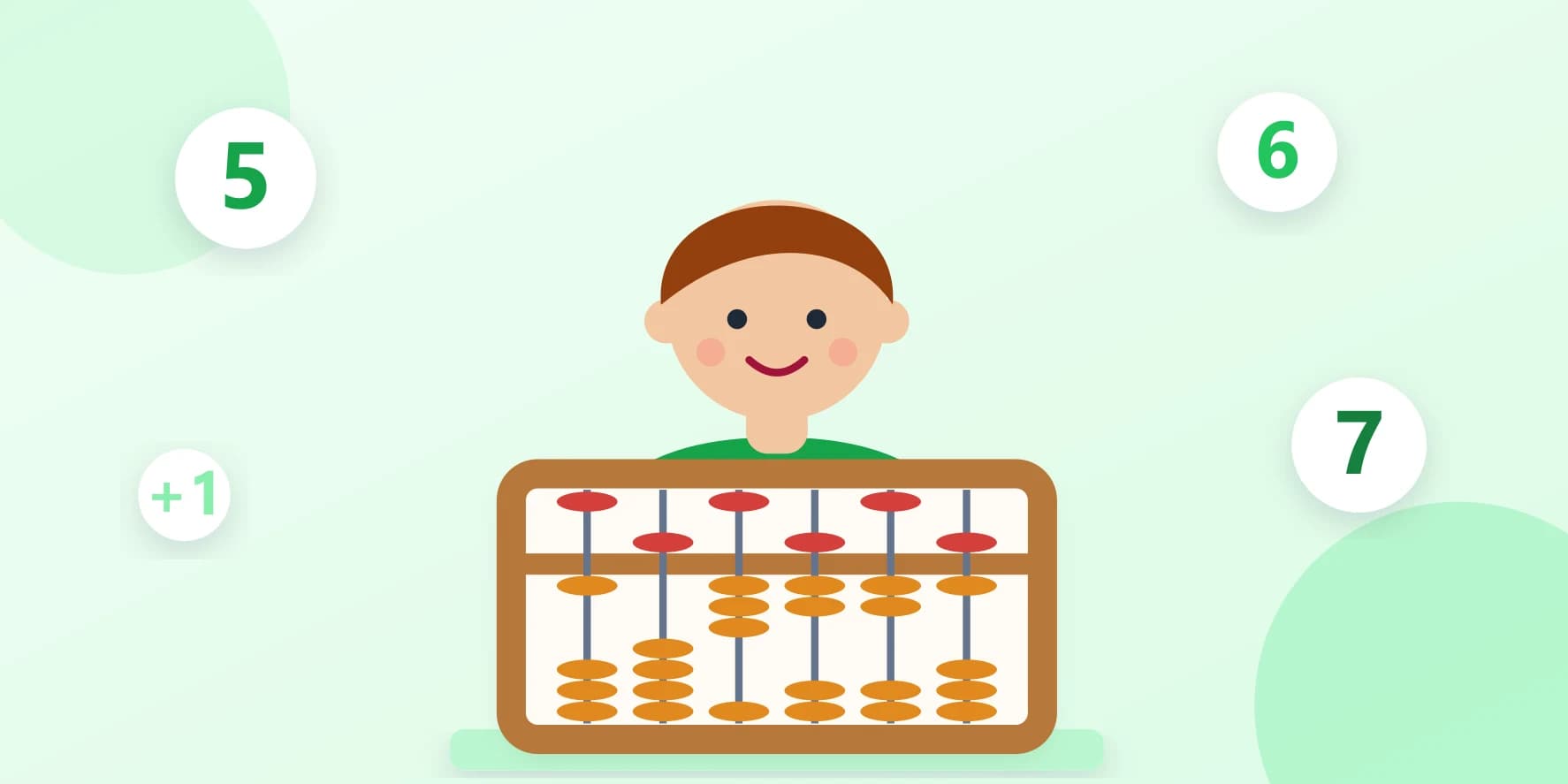
The child gets used to calculating on an abacus. Then begins visualising the beads mentally.
At school, however, the teacher introduces written calculation, number decomposition, column addition and subtraction, or another method.
Can these different systems interfere with each other?
It is a reasonable question.
Mental arithmetic and school mathematics do use different tools. But they also serve different purposes.
School mathematics teaches mathematics.
Mental arithmetic primarily trains calculation skills while also providing structured practice in attention, concentration, working memory, visualisation and information processing.
One should not try to replace the other.
In short
Mental arithmetic and school mathematics are not competing systems. School mathematics teaches mathematical concepts and problem solving, while mental arithmetic develops a specialised calculation skill and provides structured practice in attention, visualisation and automaticity. Children can learn both when the methods are kept in their proper context.
Mental arithmetic is not an alternative school mathematics system
This is probably the most important thing for parents to understand.
A child who studies mental arithmetic is not learning a different type of mathematics instead of the school curriculum.
The child still needs to learn how to:
- understand numbers;
- solve mathematical problems;
- work with fractions;
- study geometry;
- learn algebra;
- solve equations;
- understand functions;
- and master everything else included in the school mathematics curriculum.
Mental arithmetic does not replace any of this. Instead, it uses arithmetic operations as a training tool.
A useful comparison is physical training in sport.
Running can improve a football player's endurance.
But running alone does not teach someone how to play football.
The same principle applies here.
Mental arithmetic can train certain underlying skills that a child may use in learning, but school mathematics still needs to be learned separately.
Why are the calculation methods different?
Take a simple example:
8 + 7
At school, a child might think:
- 8 + 2 = 10;
- 5 remains;
- 10 + 5 = 15.
Or the teacher may introduce another method.
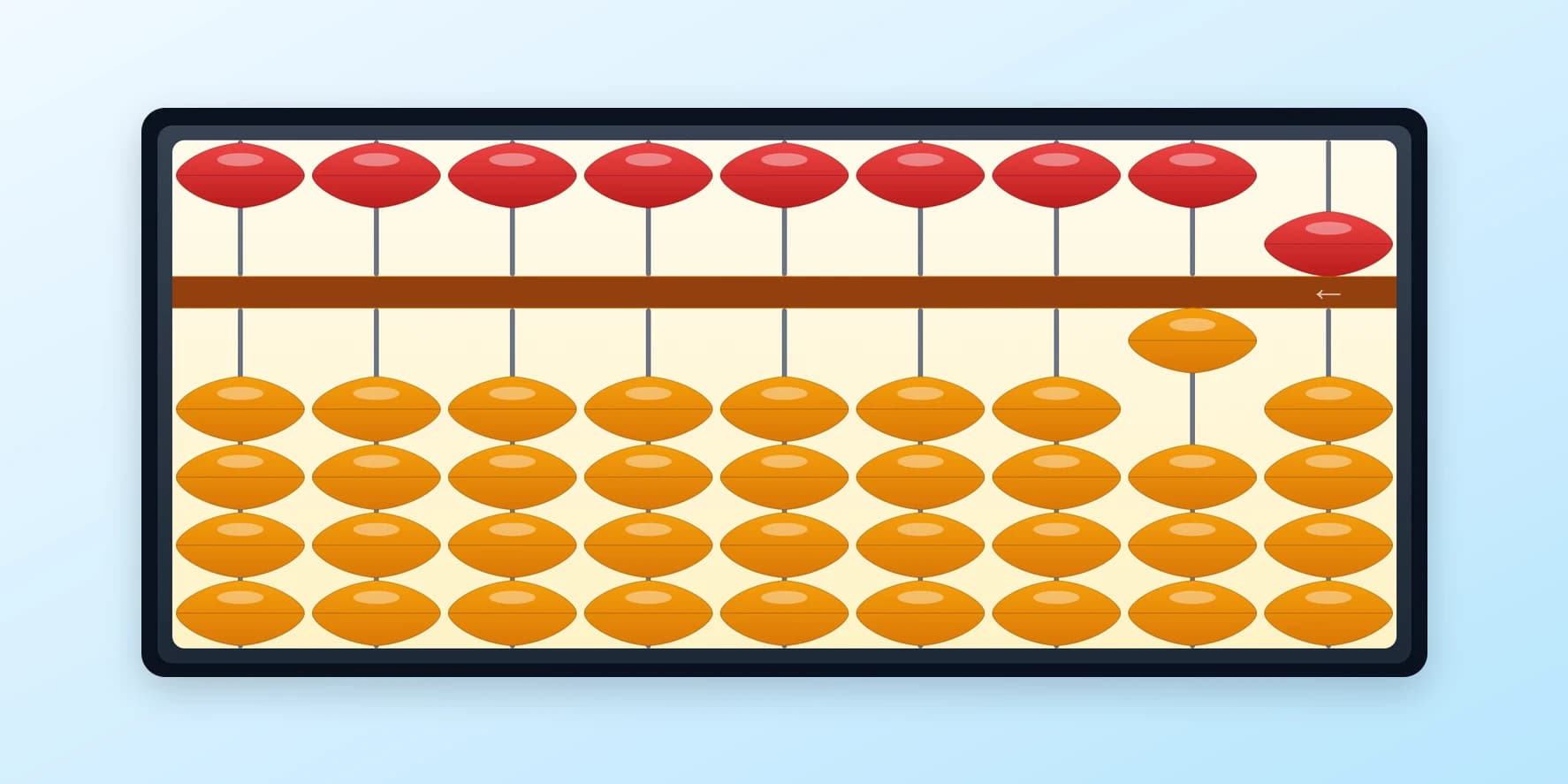
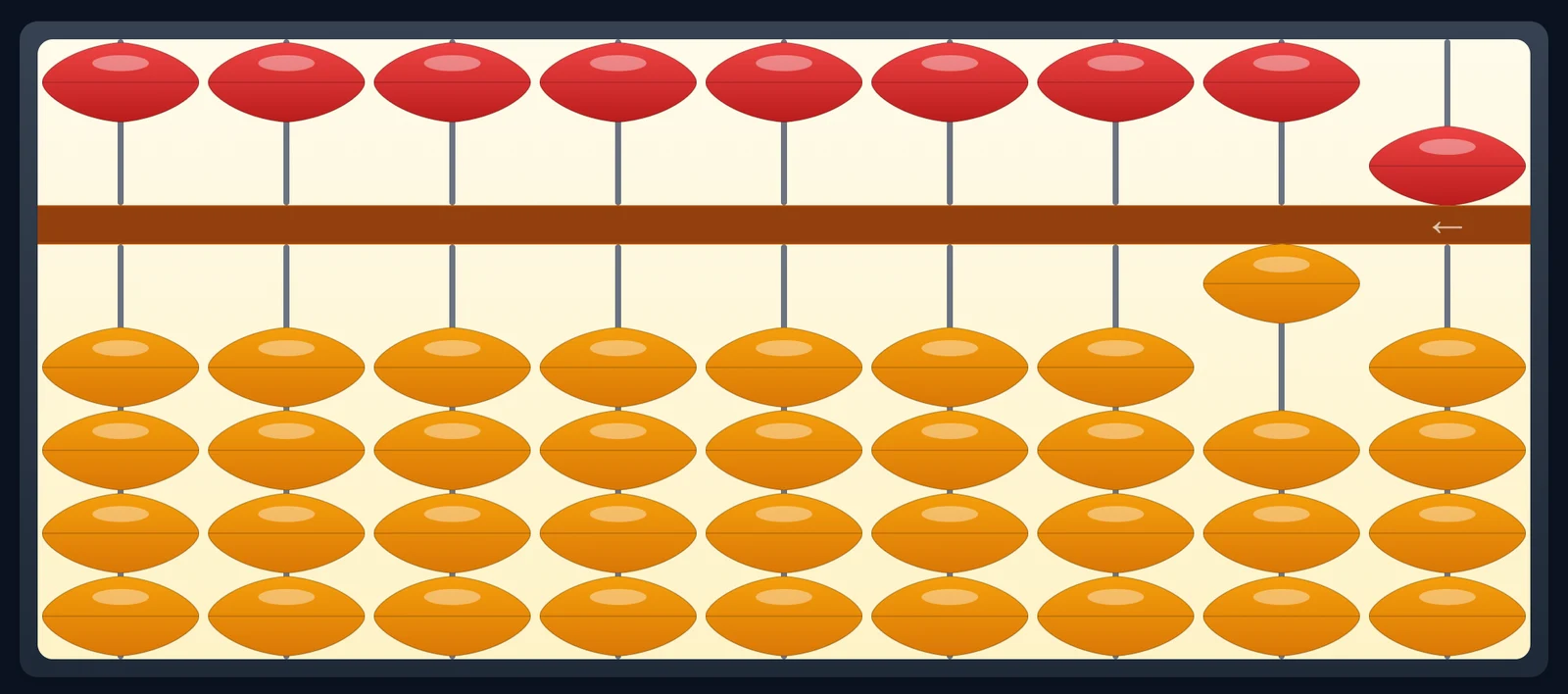
On an abacus, the child uses bead movements and the Big Friends system.
During mental calculation, the child may not consciously verbalise an intermediate result at all. Instead, the child visualises the bead configuration and updates the mental abacus.
The final answer is the same: 15.
But the path to the answer is different. And that is completely normal.
The same person can use several calculation strategies
Adults do this all the time. Suppose you need to calculate:
100 − 48
You can perform a standard subtraction. Or you can think:
- 48 + 2 = 50;
- another 50 makes 100;
- therefore the answer is 52.
You could also write it in a column. Calculate mentally. Or use a calculator.
Having several strategies does not automatically create confusion.
Over time, people learn which tool is appropriate for which task. Children can learn the same thing.
When can confusion actually occur?
Problems are more likely to appear when adults mix different teaching methods within the same task. For example:
- the school teacher explains one method;
- at home, the parent says: “Don't do it that way. Use your abacus method.”
- and the mental arithmetic teacher gives a third instruction.
That is when a child can genuinely become confused.
A simple rule usually works well:
during school mathematics, follow the school teacher's requirements;
during mental arithmetic, follow the mental arithmetic methodology.
The two systems do not need to compete.
Mental calculation is especially useful when a task contains routine arithmetic
Imagine a more complex school problem.
The child understands what needs to be done. But the solution contains calculations such as:
27 + 18 · 45 − 16 · 8 × 7 · 120 ÷ 4
If these basic calculations require a lot of attention, part of the child's mental effort is spent on the arithmetic itself.
If routine calculations are easier and faster, more attention can remain available for understanding the actual problem.
Fast calculation can therefore be a useful tool. But it does not replace understanding.
A child may calculate 37 + 46 extremely quickly.
But if the child does not understand the word problem, calculation speed alone will not solve it.
Fast calculation and strong mathematics are not the same thing
This distinction is essential.
Parents sometimes see a child adding long chains of numbers at high speed and think:
“This means my child will be a mathematics genius.”
That conclusion would be too strong.
Mental arithmetic and mathematical thinking overlap in some areas, but they are not identical.
Mathematics also requires:
- understanding patterns;
- logical reasoning;
- abstraction;
- problem solving;
- proof;
- spatial reasoning;
- understanding formulas and relationships.
Very fast calculation is only one tool.
And the reverse is also true: an excellent mathematician does not need to calculate ten numbers per second.
So why learn mental arithmetic?
Because its purpose is broader than simply teaching children to add faster.
In our methodology, we view mental arithmetic primarily as a long-term structured training system.
A child regularly has to:
- concentrate;
- follow a sequence;
- hold information;
- visualise bead positions;
- process incoming numbers;
- monitor accuracy;
- gradually increase speed.
Arithmetic becomes a kind of training environment.
Fast calculation is the most visible result. But it is not the only purpose.
A useful analogy: preparing the soil
You can imagine a child's development as soil.
Different things may later grow in it:
- mathematics;
- languages;
- physics;
- chemistry;
- music;
- programming;
- and many other complex skills.
Mental arithmetic does not automatically make all of these subjects easier. It does not directly teach them.
But regular cognitive training can help exercise underlying processes such as:
- concentration;
- working memory;
- consistent practice habits;
- information-processing speed;
- visualisation.
So it is better to say:
“Mental arithmetic can train processes that are also used in other forms of complex learning.”
rather than:
“Mental arithmetic will teach a child physics or guarantee better results in every school subject.”
Why the period before school becomes highly complex is interesting
At ages around 5–7, a child's academic workload is usually still relatively simple.
- They are not yet studying advanced algebra.
- Physics has not started.
- There are no complex chemistry formulas.
This period can therefore be used to gradually practise:
- sustained concentration;
- regular work;
- holding sequences of actions;
- switching between tasks;
- tolerance for repeated practice.
Later, school becomes considerably more demanding. The child may then use some of these established learning habits in other areas.
But again, this does not mean that mental arithmetic directly teaches algebra, physics or chemistry. It provides a different type of preparation — see the best age to start mental arithmetic.
Can children confuse normal numbers with the abacus method?
At an early stage, some temporary overlap is possible, especially with younger children.
A child may try to apply a familiar abacus strategy in a situation where the school teacher expects another algorithm.
Usually, this is not a serious problem if teachers and parents clearly separate the contexts.
The child gradually understands:
- here we use the abacus;
- here we solve a school problem;
- here we use the written school method.
As children grow older, this distinction usually becomes natural.
Should the school teacher know that the child studies mental arithmetic?
For a young child who has just started school, it can be useful.
Not because the school teacher should change the mathematics curriculum.
Simply because it helps explain why the child may sometimes calculate in an unusual way.
A parent can say:
“My child studies mental arithmetic and may sometimes use a mental abacus for calculation, but we understand that school tasks should be completed using the method required in class.”
That is usually enough.
What if the school teacher asks the child to show the solution?
A child may calculate the answer mentally almost instantly. But the teacher says:
“Show how you solved it.”
That is a completely reasonable request.
The child should then complete the school task according to the school requirements.
Because the teacher may be evaluating more than the final answer. They may be checking whether the child understands a particular method.
Mental calculation can still be useful as an internal check.
But if the task requires:
- written working;
- an explanation;
- a formula;
- a specific solution process,
the child should show it.
Children do not need to demonstrate mental arithmetic in every school lesson
Parents are understandably proud when their child develops an impressive skill.
Sometimes they want the child to demonstrate it constantly. But that is not always useful.
Mental arithmetic is a tool. The child can use it when it helps.
There is no need to turn every school mathematics exercise into a speed demonstration. Especially when the lesson is teaching a completely different skill.
Can fast calculation interfere with understanding?
It can — if the training is designed badly.
For example, if the child is constantly taught:
“The only thing that matters is answering as fast as possible,”
they may begin rushing toward the answer without properly understanding the task.
But that is not an inherent problem with mental arithmetic. It is a problem of teaching priorities.
In good training, speed comes after accuracy and understanding.
The same principle applies in school mathematics:
- first understand the problem;
- then solve it;
- and calculation speed can help with the technical part.
Why speed should not become the main measure of success
Imagine two children.
The first calculates very quickly but reads the problem carelessly.
The second calculates more slowly but understands the task extremely well.
Which child is better at mathematics? Speed alone cannot answer that question.
Mental arithmetic should therefore never create the message:
“The faster child is the smarter child.”
Speed is a trainable parameter. It can be useful. But it is not a universal measure of intelligence or mathematical ability.
What happens when the child reaches multiplication and division?
At more advanced stages, the mental arithmetic curriculum expands. It can include:
- multiplication;
- division;
- larger digit lengths;
- longer chains;
- Anzan;
- other advanced formats.
But the same principle remains.
The child learns particular calculation operations and gradually brings them to a high level of automaticity.
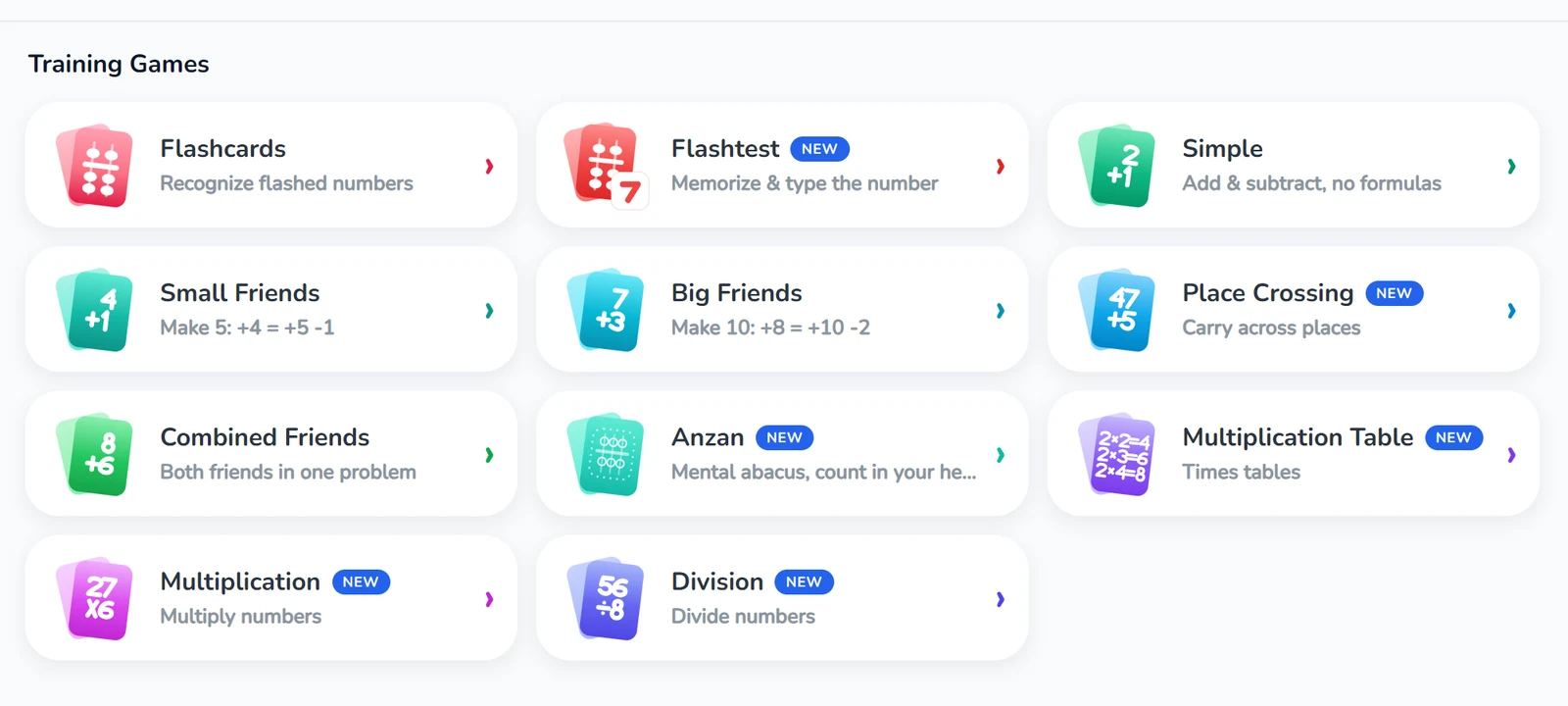
School mathematics continues developing along its own path. The two systems can exist side by side.
Why workbooks are still useful
When parents see a digital platform, they sometimes ask:
“If my child can practise on a screen, why do we still need a workbook?”
Because different tools serve different purposes.
At the early stages, paper exercises and a physical abacus are valuable for:
- establishing mechanics;
- seeing the structure of an example;
- working slowly and systematically.
A digital system becomes especially useful when the teacher needs:
- large amounts of repetition — see how much practice a child needs each day;
- precise speed control;
- digit-length control;
- mixed topics;
- mental calculation;
- error analysis.
So the right question is not:
“Workbook or platform?”
It is:
“How should we use both tools correctly?”
How Amavit helps keep the learning roles separate
In Amavit, a teacher can assign practice based on exactly what the child has already learned. For example:
- a specific topic;
- speed;
- digit length;
- chain length;
- number of operations.
The platform is not designed to replace school mathematics.
Its purpose is to help the mental arithmetic teacher develop the specific skills that belong to the mental arithmetic program.
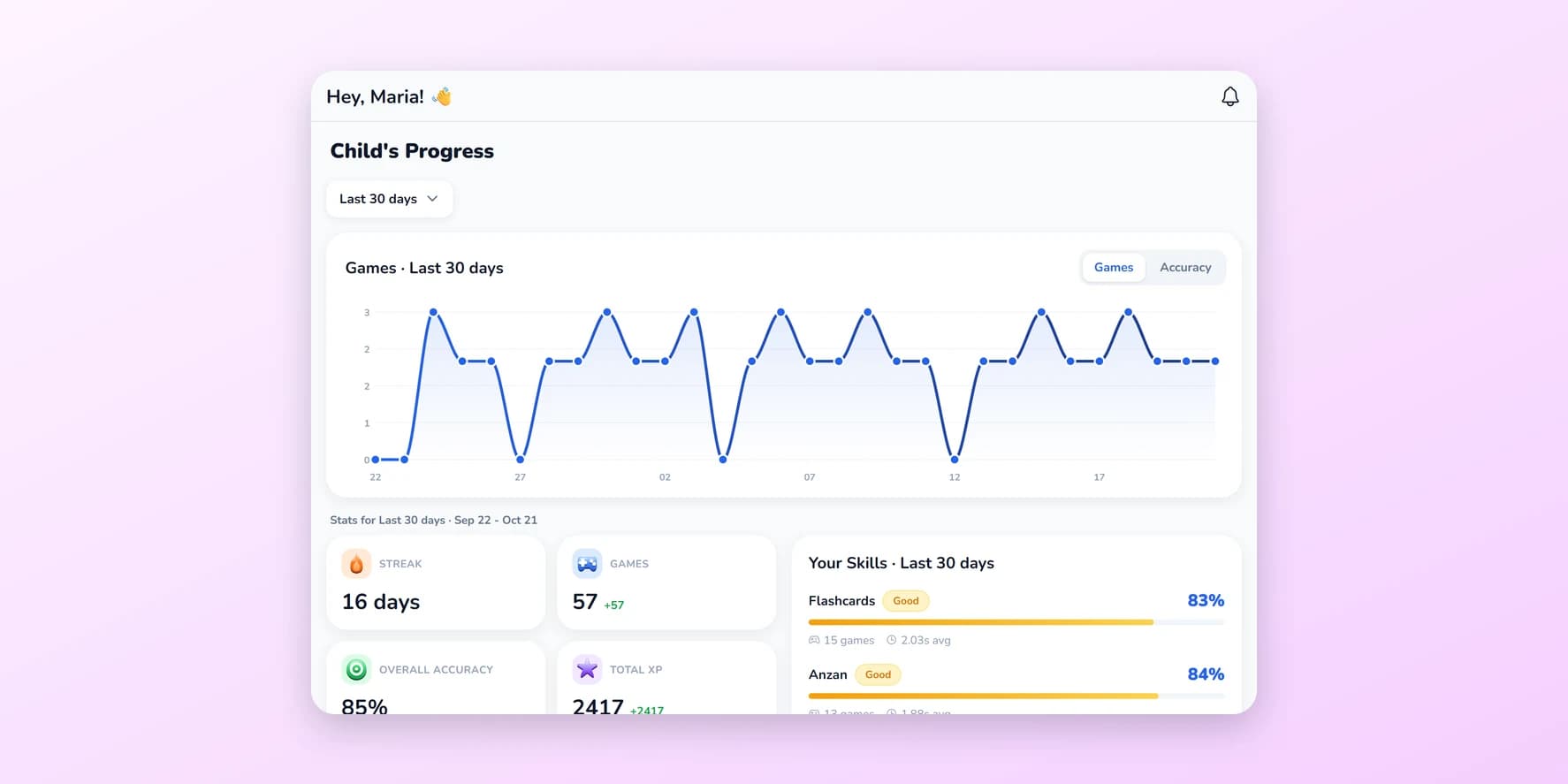
At the same time, parents can monitor progress and see whether the child is genuinely developing rather than simply producing correct answers — see how parents can support a child without becoming a second teacher.
It helps when children understand that they have different tools
As children grow older, it can be explained very simply:
“At school, you are learning mathematics. In mental arithmetic, you are training another way of calculating. Sometimes you can use it to get or check an answer more quickly.”
This removes the sense of conflict.
The child does not need to choose: abacus or school mathematics. They gradually learn to use both.
What if the two methods produce different answers?
That can actually be useful.
- Suppose the mental abacus gives 46.
- But the written school solution gives 48.
Something is wrong.
Now the child can check both methods and find the source of the difference.
The two strategies become tools for checking each other.
The important thing is not simply to choose whichever answer looks better. The child should identify why the results differ.
One of the biggest mistakes parents make is expecting too much
After several months of mental arithmetic, parents may begin expecting that the child should now:
- be the best at school mathematics;
- receive only top grades;
- solve every problem instantly;
- understand algebra faster than everyone else.
Those expectations are unrealistic.
Mental arithmetic is not a magic solution. It does not replace:
- a strong school teacher;
- understanding the curriculum;
- home study;
- careful reading;
- logical reasoning;
- interest in mathematics.
It gives the child another tool and another form of regular cognitive training.
So how should real progress be evaluated?
Look at the things the program actually trains. For example:
- Is the child becoming better at concentrating during practice?
- Can they maintain a longer sequence?
- Is accuracy improving?
- Is speed gradually increasing?
- Is the mental abacus becoming more stable?
- Can the child work with longer chains?
- Has digit length increased?
- Is the child becoming more independent in practice?
These are direct outcomes of the training.
If school calculations also become easier, that is an excellent additional benefit. But it should not be promised or demanded from every child.
Mental arithmetic and school mathematics do not need to compete
They serve different educational purposes.
- School should teach the child to understand mathematics.
- Mental arithmetic can provide a powerful additional calculation and training tool.
With the right approach, the child does not need to choose between them. They learn:
- when to explain a solution;
- when to calculate quickly;
- when to use a mental abacus;
- when to write the calculation down;
- when to stop calculating and think about the problem itself.
The simplest way to understand the relationship
The idea can be summarised in one sentence:
mental arithmetic does not replace mathematics — it complements learning.
The child still needs to learn how to think. Understand the problem. Find a solution. Study algebra and geometry.
Fast calculation, concentration, visualisation and regular structured practice become additional tools.
When they are used this way, the conflict between school mathematics and mental arithmetic largely disappears.
They simply serve different purposes — and can work well together.
Frequently asked questions
Can mental arithmetic confuse a child at school?
Usually not when school mathematics and mental arithmetic are taught as separate methods for different purposes. Problems are more likely when adults give conflicting instructions for the same task.
Does mental arithmetic make children better at mathematics?
Mental arithmetic can strengthen calculation fluency and provide practice in attention, working memory and visualisation, but it does not replace mathematical reasoning or the school curriculum.
Should a child use mental abacus during school math?
It can be used as a calculation tool when appropriate, but if the teacher asks for a specific written method or explanation, the child should follow the school requirement.
Is mental arithmetic the same as mathematics?
No. Mental arithmetic focuses heavily on calculation and mental-abacus skills, while mathematics is a much broader discipline involving concepts, reasoning, problem solving, algebra, geometry and more.
Do children still need workbooks if they use a mental arithmetic app?
Yes. Physical abacus work, paper exercises and digital practice can serve different purposes and work together within a well-designed program.
Mental arithmetic works best when it has a clear role: developing calculation skills without replacing the mathematics children learn at school.
See how Amavit helps teachers organise structured mental arithmetic practice.
Learn More About Amavit