Why Children Need Competitions, Olympiads and Challenges — and What They Teach Beyond Mental Arithmetic
When a child studies mental arithmetic, sooner or later there is an opportunity to participate in a competition. It may be:
- an internal school tournament;
- an online championship;
- a local Olympiad;
- an international competition;
- a small battle within a class.
Parents sometimes ask:
“Why does my child need this? We are studying for development, not for medals.”
The value of competition goes far beyond medals. And this is not only true in mental arithmetic.
Children benefit from occasionally stepping outside their familiar environment and seeing: Where am I among other children who are learning the same skill?
This is part of education. But it is also part of growing up and becoming a member of society.
Competitions give children something regular practice cannot provide: an external point of reference. They can see their current level among other students, learn to handle winning and losing, perform under pressure and set new goals — while understanding that a ranking does not define their intelligence or personal value.
At home, every child is special
For parents, their child really is special. The most loved. The most important. And very often — the best.
There is nothing wrong with that. Children need to feel:
“I am loved regardless of my result.”
But as they grow, they also need to discover another side of life. Outside the family, there is a much larger world. There are:
- other children;
- different abilities;
- different levels of preparation;
- people who are stronger today;
- people the child may already be stronger than;
- people who have simply trained for longer.
Every child is unique. But no child is the only one. Understanding this is an important part of growing up.
Competition provides a real point of reference
A child may be the fastest student in their regular class. The teacher praises them. Parents say:
“You calculate incredibly well.”
All of that may be completely true. Then the child arrives at a large competition and sees another hundred children. Suddenly:
- someone is faster;
- someone is more accurate;
- someone works at a completely different level;
- and the child may already be ahead of others.
This is valuable information. Not because the child needs to learn “Someone is better than me.” But because they begin to develop a realistic frame of reference.
A child begins to understand where they are
This is one of the most valuable effects of competition. The question is not:
“Am I good or bad?”
The question becomes:
“Where am I right now?”
For example: I have been training for eight months. I am one of the strongest students in my class. At a larger competition, I finished somewhere in the middle. That means there is another level I can reach.
The opposite can happen too. A child may not think of themselves as particularly strong. Then they enter a competition and discover that their result is actually very good. That experience can change how they see their own abilities.
Parental praise and an external result have different purposes
Parents should support their children. But parental support is naturally personal. A mother or father may say:
“You are the best to me.”
And in that sense, they are absolutely right. A competition answers a different question:
“How does my current skill compare with other participants performing under similar conditions?”
Children benefit from both: unconditional family support and experience of the real world. One should not replace the other.
Meeting someone stronger is an important experience
Some children become used to being first. At school. In their class. During regular practice. Then one day they meet someone stronger.
That can be extremely valuable. The child gradually learns:
If someone is better than me at one skill today, that does not make me a worse person.
Perhaps the other child has trained longer, practises more, performed better today or has a particular strength in this area. And I can continue improving too.
That is a much healthier lesson than: “If I am not first, I have failed.”
Children also need to learn how to lose
We spend a lot of time teaching children technical skills. But there is another skill worth learning: how to handle a result that is worse than expected.
The child trained. Wanted a medal. Did not get one. What happens next? They can decide:
“I will never compete again.”
Or they can learn to:
- feel disappointed;
- accept the emotion;
- look at the result;
- understand what went well;
- identify what needs improvement;
- return to practice.
That is an important life skill. Later, children will encounter exams, university applications, job interviews, competitions, sport, professional challenges and projects that do not always succeed.
They will not always be first. Learning this in childhood, in a healthy environment, can be valuable.
Children also need to learn how to win
Winning requires maturity too. A child wins a competition. Wonderful. They can understand: I prepared well; I performed well today; my work produced a result.
But victory should not become “I am better than everyone else.” There may be a stronger competitor next time. The next category may be harder. There is always another level.
Competitions can therefore teach children not only how to lose well. They can also teach them how to win well.
What competition teaches beyond winning.
Competition is part of social experience
At an Olympiad or championship, the child is surrounded by other children who share an interest. They see: I am not the only one doing this.
There are children from another school. Another city. Another country. A younger child may calculate faster. An older student may demonstrate an extraordinary level.
The child gradually begins to understand: I am part of a larger community.
That experience is very different from working alone at home or even training in one regular class.
Competition expands a child’s world
Home is a small environment. School makes it larger. A sports club or educational centre expands it again.
A major competition can show the child: the world is much bigger than my normal circle.
There are different levels. Different schools. Different teaching systems. Different countries. Different talented children. The child's own performance becomes part of a much larger picture.
This does not mean children should be compared with others every day
This distinction is extremely important. Competition provides an external point of reference. But daily progress should still be evaluated mainly against the child's own previous performance — the approach we describe in how to measure a child’s progress in mental arithmetic.
Internal comparison
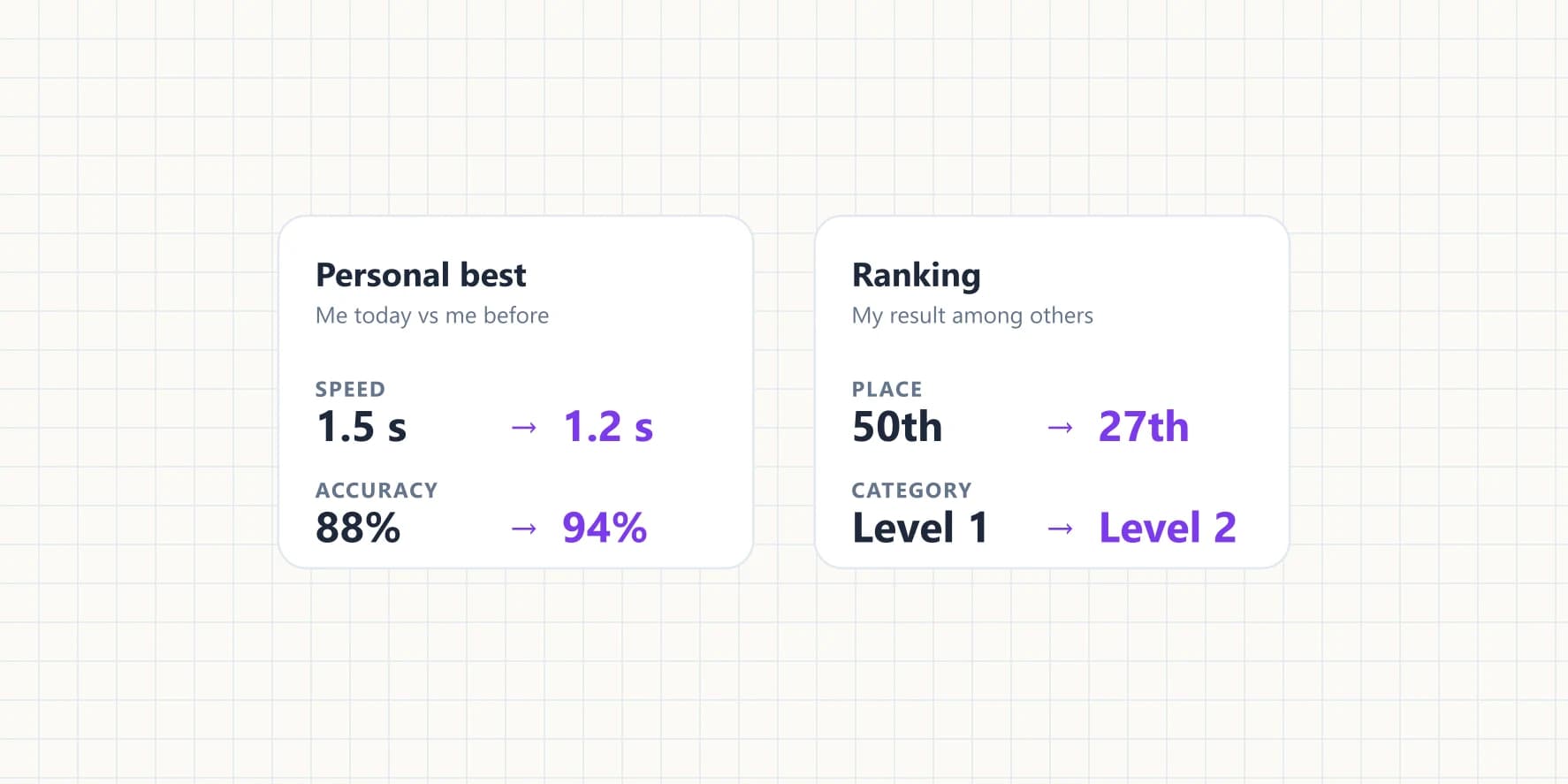
Me today vs me yesterday: accuracy, speed, complexity, personal best.
External comparison
My result among other participants: current level, stronger competitors, ranking, new goals.
Children benefit from both perspectives.
Ranking and personal progress should be viewed together
Imagine: last year the child finished 50th. This year they finished 27th. There is still no medal. But:
- speed increased;
- accuracy improved;
- the category became more difficult;
- the overall result was much stronger.
That is significant progress. So after a competition, the discussion should not end with 1st, 2nd or 3rd place. Another question matters just as much:
“What did you do better than last time?”
Sometimes 20th place can be more valuable than first place
A child may win a very easy category without developing very much. Another child may finish 20th in an extremely strong group while producing the best performance of their life.
From a learning perspective, the second experience may be more valuable. Because it shows the child: there is another level ahead.
Strong students especially need to meet stronger students
This can be one of the most powerful motivational effects. A child is the best in their class. Everything feels easy. They begin to think:
“I already know everything.”
Then they attend a competition. And see another child calculating twice as fast. The first reaction may be:
“Is that even possible?”
The next one may be:
“I want to learn how to do that too.”
Suddenly there is a new target — for some, it may be high-speed Anzan or even Double Power.
Mental arithmetic makes different levels very visible
Mental arithmetic has several measurable parameters: speed, accuracy, digit length, chain length and task complexity. Children can see differences directly.
For example, one child works at 1 second per operation. Another at 0.5 seconds. A highly trained student may be faster still — see how speed develops in mental arithmetic.
Now the next goal is no longer theoretical. The child has just seen someone who can actually do it.
A competition turns practice into preparation for an event
The instruction “You need to practise today” is not always very motivating. But if a championship is two months away, practice has a clearer purpose. For example:
- current stable speed: 1.5 seconds — target: try to reach 1.2 seconds;
- current accuracy: 88% — target: stabilise it above 93–95%.
Now there is a goal, a deadline and a measurable result. Training becomes preparation — and regular practice becomes easier to keep up (see how much practice a child needs each day).
But the goal is not to win at any cost
This is where the teacher matters — and why it is worth choosing a good mental arithmetic teacher. Competition preparation should not become:
“Faster! Faster! Faster!”
If technique begins to collapse, the preparation is moving in the wrong direction. The fundamental sequence remains:
technique → accuracy → automaticity → speed
Competition does not cancel methodology.
The first competition does not need to be an exam
Especially for a young child. The first competition may have one simple purpose: experience participation.
Arrive. Register. See other children. Sit in the assigned place. Hear the starting signal. Complete the task. Finish the event.
That alone is useful. The second competition will already feel different. The child knows:
“I have done this before. I know what happens.”
Performing while nervous is also a skill
At home, the environment is comfortable. At a competition there may be noise, an unfamiliar room, many people, a timer, judges and parents waiting for the result.
Even a strong student can perform below their normal level. That is normal.
The ability to use a learned skill under pressure and in unfamiliar conditions also develops through experience. Competitions offer a relatively safe environment in which children can practise that.
A child learns that one bad result is not a catastrophe
This may be one of the most useful lessons. Today it did not work. So what? We look at the result. Analyse it. Train. Try again.
Nothing terrible happened. The parents still love the child. The teacher does not suddenly decide “You are incapable.” It was simply one performance. And there will be another opportunity.
Competitions can reveal weaknesses that ordinary practice hides
During normal training, the child works in a familiar environment. Competition adds pressure. Weak points can become more visible. For example:
- accuracy falls;
- the child starts rushing;
- concentration drops after several minutes;
- a particular topic collapses at higher speed.
This is valuable information for the teacher.
Analysis after the competition matters
A competition should not end with “You finished 14th.” It is much more useful to examine:
- what went well;
- what was difficult;
- where mistakes appeared;
- how this compares with the previous competition;
- which speed remained stable;
- what can be improved before the next event.
Then the competition becomes part of the educational process.
- Practice
- Prepare
- Compete
- Analyse
- Set a new goal
- Practice again
A healthy competition cycle.
This is where analytics becomes useful
The teacher can compare normal training performance, pre-competition preparation and competition results.
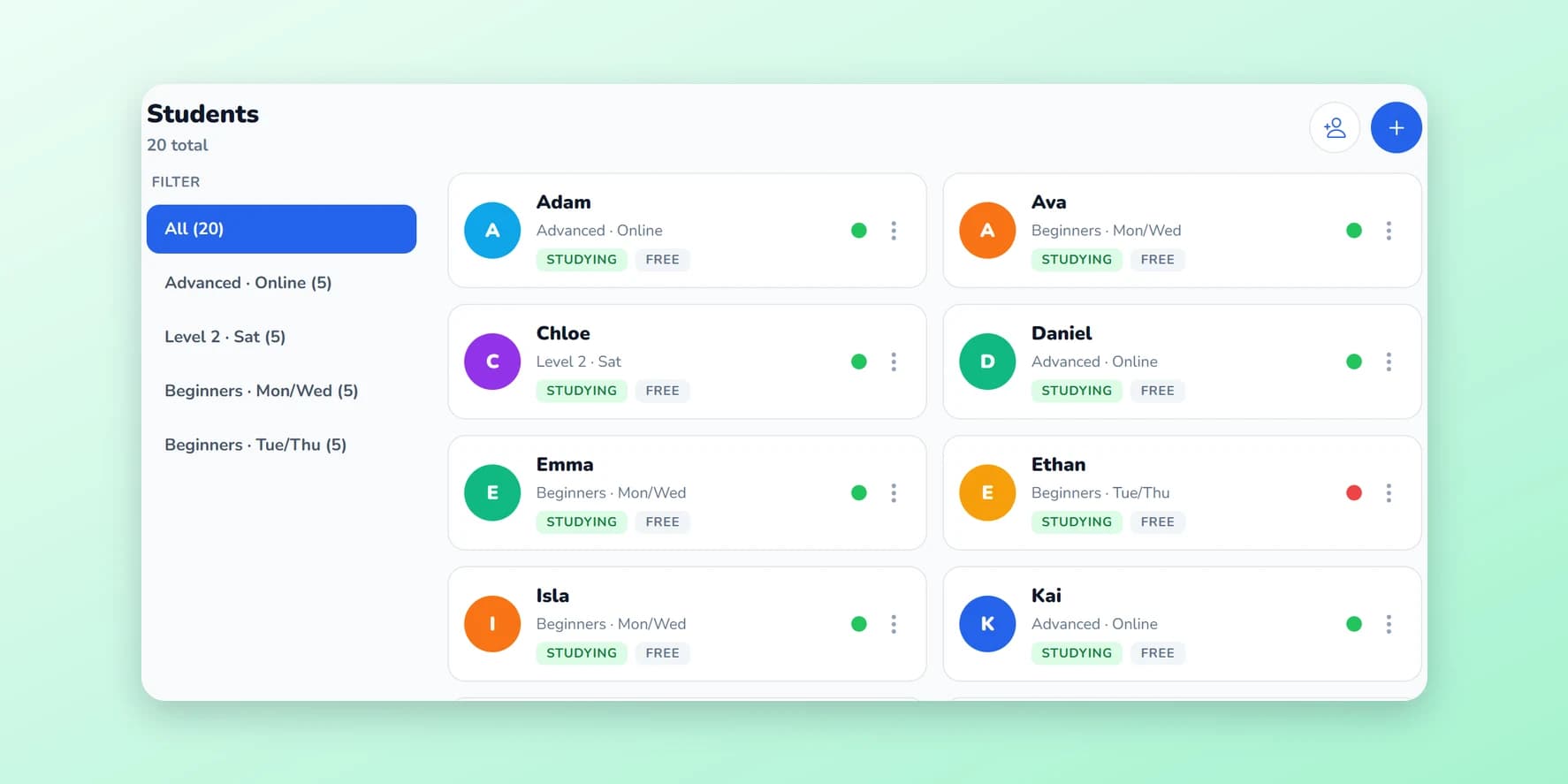
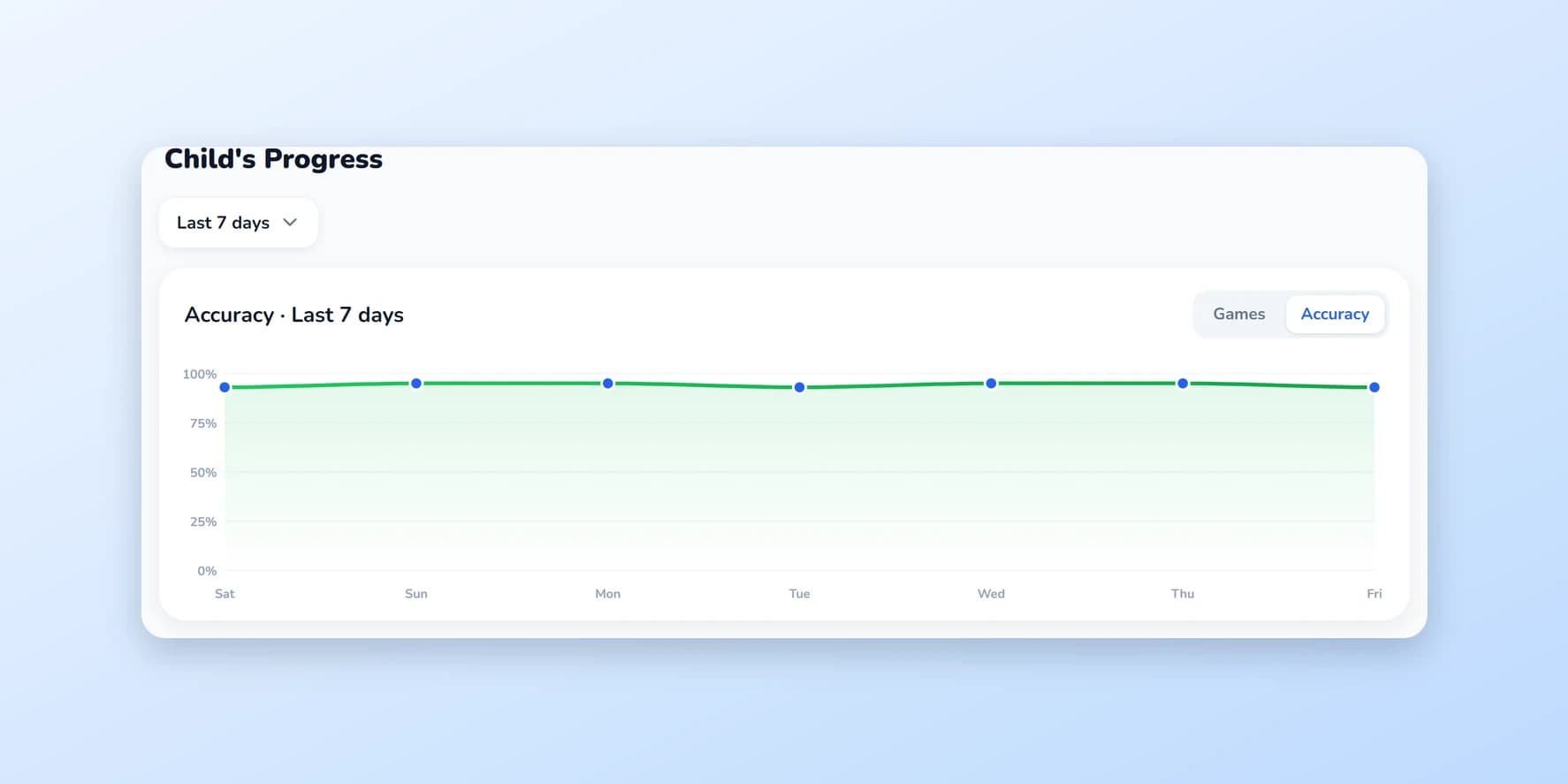
In Amavit, teachers can follow indicators such as speed, accuracy, practice consistency, training volume, weak topics and progress over time.
This allows the discussion after a competition to become more useful than “medal / no medal.”
Personal best and ranking should work together
A healthy model gives the child two goals. The first: produce my best personal result. The second: see where that result places me among other participants.
The first depends mainly on the child's own development. The second also depends on everyone else competing that day.
So even if the final ranking is lower than expected, the child may still say:
“But I achieved a new personal best.”
That is a real achievement.
Competition tells a child where they are among others. Progress tracking tells them whether they are becoming better than they were before.
Competitions create another level of motivation
Daily practice has small goals: a streak, a personal record, an achievement, a new level, a league. A competition becomes a larger goal. For example:
- each day — small practice;
- each week — visible improvement;
- every few months — a championship.
That creates several layers of motivation — one more of the tools that keep children motivated.
Competition does not always need to mean a major tournament
Children can start small. For example: a battle between two students; a competition inside one group; a tournament between groups; a school Olympiad; an online championship; a national competition; an international event.
The child gradually becomes familiar with external comparison. This can be especially helpful for children who become nervous easily.
Online competitions can also be useful
Not every family can travel regularly to competitions. Online formats can allow children to:
- participate more often;
- meet competitors from other cities or countries;
- gain competition experience;
- stay in a familiar physical environment.
For some children, this can be an excellent first step.
Rules need to be clear
For a comparison to have meaning, participants should compete under reasonably comparable conditions. A good competition needs clear categories, the same task format, the same time limits, consistent rules and transparent scoring.
Then the child understands: “We really performed the same challenge.” And the comparison becomes meaningful.
Parents should not turn competition into a question of family prestige
This is where a useful competition can become harmful very quickly. For example:
“You have to win.”
“We spend so much money on your lessons.”
“Why is that child better than you?”
That is not motivation. It is pressure.
Children should know that parents will be happy when they succeed — but their place in a ranking does not determine how loved or valued they are.
Before the competition: support, do not create pressure.
After the competition: discuss progress, not only ranking.
A medal is a result of one competition. A child’s relationship with learning lasts much longer.
“You are the best to me” does not need to disappear
It simply needs to be understood correctly. For parents, their child really can be the most loved and important person in the world. But the world does not have to give that child first place every time.
There is no contradiction between saying “You are the best to me.” and “Today another child solved more problems. Let’s see what we can learn from that.” These two ideas can coexist.
Being unique does not mean being better than everyone
Every child is unique. But uniqueness means “I am myself.” It does not mean “I must be better than everyone at everything.”
Competitions can help children begin to understand this difference. A child may be very strong in mental arithmetic, average at football, excellent at drawing, poor at singing and fast at learning languages.
That is normal. Other children have their own combinations of strengths too.
A child can be unique without having to be the best at everything.
This is one important part of socialisation
Gradually, the child learns:
- I matter, but I am not the only person who matters.
- I am unique, but other people are unique too.
- I can be stronger in one area and weaker in another.
- I can learn from someone who is better than me today.
- My current result can improve.
This is a healthy model of the wider world.
The main conclusion
It would therefore be too narrow to say:
“Competitions are only for children who naturally love competition.”
A more useful view is: experience with competitions, Olympiads, quizzes, battles or other forms of external comparison can benefit most children.
Not necessarily because they need to win. Not because they need a medal. And not because they need to compete constantly.
The deeper value is that the child steps outside the familiar environment, sees other children, understands their current level, learns to win, learns to lose, learns to perform while nervous and sees how much further they can develop.
And gradually understands something very important:
“I am unique and important. But I live in a world full of other unique, capable and interesting people.”
In mental arithmetic, competition adds one more practical benefit: it turns months of training into a clear goal and helps the child understand why it is worth becoming better than they were yesterday.
Frequently asked questions
Are mental arithmetic competitions useful for children?
Yes. Beyond ranking, competitions can give children an external point of reference, motivate practice and provide experience performing under unfamiliar conditions.
Does a child need to win for a competition to be useful?
No. A child can improve their personal result, identify weaknesses and gain valuable experience even without winning a medal.
Should children be compared with other students?
Occasional external comparison can be useful, especially in competitions, but everyday progress is better judged mainly against the child’s own previous performance.
What should parents say if a child loses?
Focus on what the child learned, what improved and what can be developed next rather than treating the result as a judgment of ability or intelligence.
Can competitions motivate advanced mental arithmetic students?
Yes. Strong students may benefit from seeing peers at higher levels because it gives them a new, concrete target for training.
Is a child’s first mental arithmetic competition important?
Yes, but the first event does not need to be about winning. Simply learning how to participate, manage nerves and complete the task can already be valuable.