Why Mental Arithmetic Skills Must Become Automatic — and What Happens as Complexity Increases
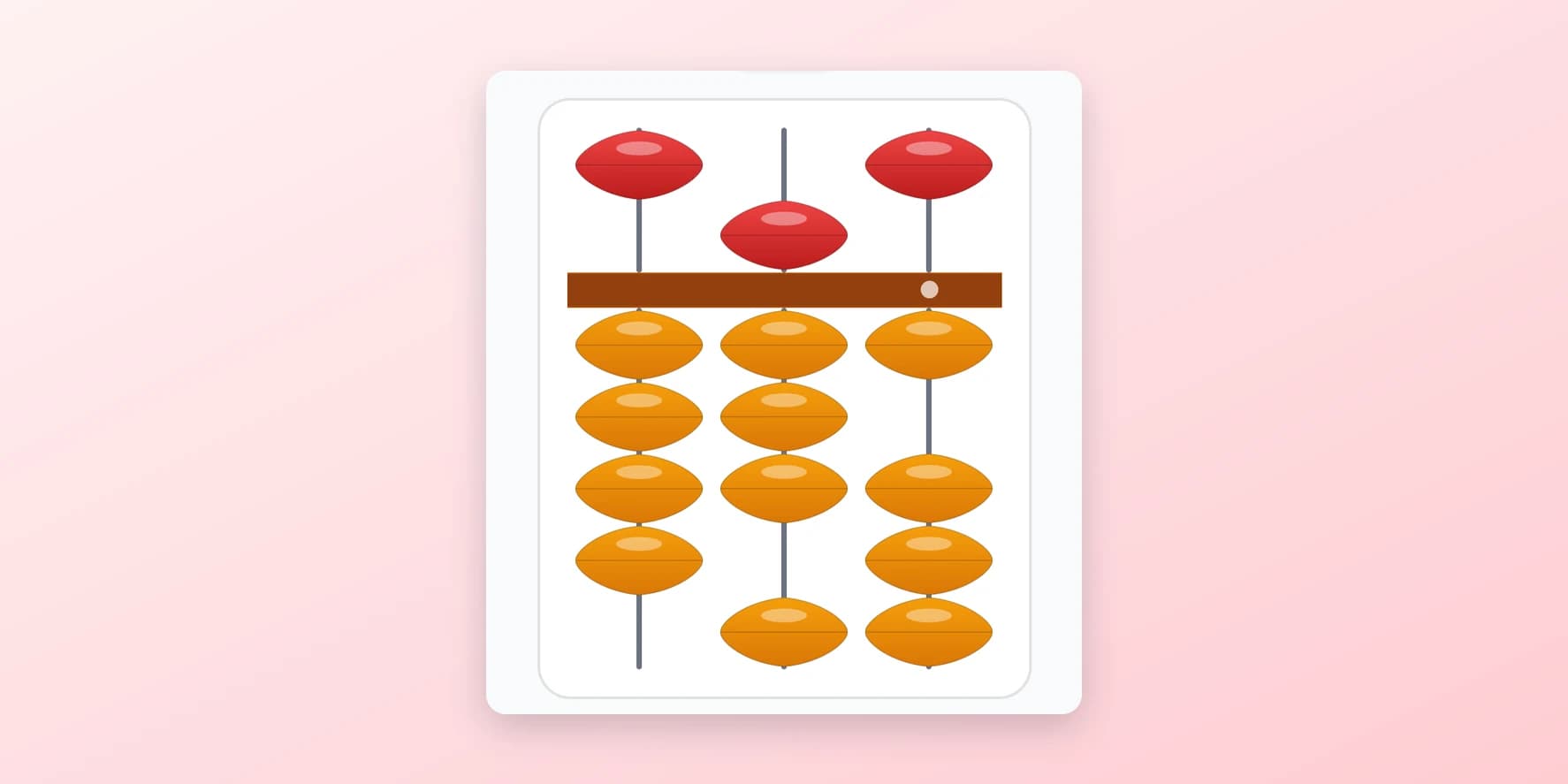
At the beginning of mental arithmetic training, a child works with a relatively small number of rules.
The first exercises are simple. Then new combinations appear. Small Friends are introduced. Then Big Friends. Transitions become more complex.
Gradually, the child moves from one-digit numbers to two-digit, three-digit, four-digit and eventually even five-digit numbers. At that stage, several different rules may need to be applied across different place values within the same calculation.
And this is where an important difference becomes obvious:
knowing a rule is not the same as being able to use it automatically.
For advanced mental arithmetic, understanding is only the beginning. The rule must become so familiar that the child can recognise the situation and perform the correct action almost immediately.
Mental arithmetic rules need to become automatic because complexity increases over time. With multi-digit numbers, mixed topics and higher speeds, children may need to recognise and apply several familiar rules rapidly while maintaining the mental abacus. Automaticity reduces the amount of conscious attention required for basic operations and frees capacity for more complex calculation.
At first, the child consciously remembers each rule
Imagine a beginner. The child sees an operation. Stops. Thinks. Remembers the rule. Chooses the correct movement. Then performs it.
That is completely normal. The child is learning.
But if the same conscious decision-making process is still required for every operation much later, high-speed calculation becomes extremely difficult. Advanced mental arithmetic requires many basic decisions to become increasingly automatic.
The number of possible calculation patterns grows quickly
At the earliest stage, the child has only a few basic actions to recognise. Then the number of possible situations increases. Small Friends and Big Friends appear. More transitions are added.
Soon, the child is dealing with dozens of familiar calculation patterns. And this is before multi-digit work becomes advanced. Once several place values are involved, the cognitive demand increases again.
A two-digit number is not simply a “bigger number”
With a one-digit operation, the child is working with one place value. With two digits, there are tens and ones. One place value may require one rule. The other may require another. With three-digit numbers, a third position is added.
So the child needs to:
- recognise the number;
- process the relevant place values;
- identify the required rules;
- update the abacus state;
- move immediately to the next number.
If every one of those decisions requires slow conscious reasoning, speed becomes impossible.
- 1 digit one place value
- 2 digits two place values
- 3 digits several possible rules inside one operation
- 5 digits a structured mental-abacus image across several rods
The more complex the calculation becomes, the more important automatic recognition becomes.
Automaticity reduces the amount of conscious attention required
When a basic operation becomes automatic, the child no longer needs to think:
“This is Small Friend +4, so now I need to do this movement.”
The pattern is recognised and the response follows almost immediately.
A useful analogy is reading. A beginning reader may process letter, letter, syllable, word. An experienced reader recognises many words as complete familiar patterns. They do not consciously analyse every individual letter.
Mental arithmetic develops in a similar direction.
Understanding tells the child what to do. Automaticity allows them to do it without stopping to think about every basic step.
The more complex the task becomes, the more important automaticity becomes
At low speed, with one-digit numbers and short chains, the child has time to think. Then the program becomes harder. Speed increases. Digit length increases. Chains become longer. More topics are mixed.
Eventually, there is simply not enough time to consciously reconsider every elementary rule.
So high-speed mental arithmetic is not just a case of a child somehow “thinking ten times faster.” It is also the result of many basic patterns becoming so familiar that they require much less deliberate decision-making — see how speed develops in mental arithmetic.
Multi-digit calculation shows why this matters
Imagine a child working with a three-digit number. At one place value, the action may be simple. At another, a Small Friend may be required. At the third, a Big Friend or another transition may appear.
All of this needs to happen while the child maintains the current state of the abacus. If every basic rule still requires a pause, the next number may arrive before the previous one has been fully processed.
This is why automaticity is not merely a bonus at advanced levels. It becomes part of the foundation.
Mental abacus places additional demands on the child
On a physical abacus, the current state remains visible. If the child pauses, the beads stay where they are.
With a mental abacus, the current configuration exists only as an internal representation — that is why physical and mental abacus practice develop together. The child must simultaneously:
- maintain the current image;
- receive the next number;
- apply the correct rule;
- update the image;
- retain the new state.
Research describes abacus-based mental calculation as relying heavily on visuospatial representation: skilled users manipulate an imagined abacus rather than relying only on a verbal sequence of intermediate numbers.
The more basic operations that have become automatic, the more cognitive resources remain available for maintaining and updating this internal representation.
What happens when a rule is understood but not automated?
At first, the problem may be difficult to notice. The child gets correct answers. They are simply a little slower.
Then the teacher increases the speed. Suddenly, the child begins to hesitate, confuse Friends, lose a place value, skip an operation, guess or lose the mental image.
Parents may think:
“The child does not know the topic.”
But sometimes the child knows it very well. They can even explain the rule correctly. The problem is different:
the rule has not yet become automatic enough for the current speed and complexity.
Knowing and performing are different stages
Ask a child: “What is the Big Friend for 7?” They may answer immediately. The knowledge is there.
Now put the same child into a rapid mixed calculation. Suddenly, mistakes appear. Why?
Because declarative knowledge — being able to explain the rule — is not the same as applying that rule automatically inside a fast sequence. This is why repetition is necessary even after the child understands the topic.
Knows the rule
Can explain it · can solve slowly · needs time to choose
Automatic skill
Recognises the situation quickly · uses it in mixed tasks · maintains accuracy at higher speed
Why similar exercises need to be repeated
Parents sometimes ask:
“Why does my child need more examples? They already understand the rule.”
Understanding is excellent. But now a different type of learning begins. The correct response needs to remain stable:
- without long pauses;
- without prompting;
- inside different examples;
- inside mixed topics;
- at higher speed;
- a week later;
- a month later.
That requires repetition — and regular return to the skill, which is why how often children practise matters as much as how many minutes they practise each day.
Repetition must still be correct
More is not automatically better. If a child repeats the same technical mistake hundreds of times, they may strengthen the wrong habit. If they work at a speed that is too high and begin guessing, the quality of practice falls.
So the learning sequence should remain:
- Understand
- Correct technique
- Accuracy
- Repetition
- Automaticity
- Speed
- Higher complexity
Speed should come after the basic pattern is stable.
Skipping the middle stages usually creates problems later.
Old rules continue to live inside new topics
A child finishes Small Friends. Then Big Friends begin. But Small Friends do not disappear. They continue to appear inside new calculations.
Later come mixed topics, multiple place values, Anzan, multiplication and division. Earlier skills become building blocks for later ones.
If one of those blocks remains weak, the more advanced skill becomes harder to build.
Automatic skills behave like ready-made components
Think about a construction set. If a child had to manufacture every piece from scratch before building anything, complex structures would take forever. But if the pieces already exist, they can be combined into much more advanced constructions.
Mental arithmetic works in a similar way. Simple. Small Friends. Big Friends. Place value. Basic movements. Once these are automated, the child can use them as ready-made components and focus attention on the more advanced task.
This is why weak foundations create larger problems later
Imagine a child has technically “completed” an earlier topic. But accuracy is only around 65–70%. The child still hesitates. The curriculum moves forward anyway.
A new topic is added. Now the child must deal with the old unstable rule, the new rule, higher speed and greater digit length. The load increases sharply. Mistakes begin to appear in several places.
The problem often started earlier than the point where it became visible — see why children keep making the same mistakes.
Automaticity does not mean mindless memorisation
This distinction is essential. The child should first understand what they are doing, why the movement is correct and which rule applies.
Automaticity should come after understanding, not instead of it.
The goal is not to turn the child into a machine. The goal is to make basic, already understood operations sufficiently stable that they no longer consume unnecessary attention every time they appear.
A simple demonstration we use with parents
At introductory lessons, the Amavit Methodology Team sometimes uses a simple magnet demonstration to help parents understand the difference between seeing a few separate objects and processing a larger structured visual pattern.
Several magnets are placed on a board. They are spread across an area rather than arranged neatly in a row. A sheet covers them. The magnets are revealed for a very short moment and then covered again.
When the number is very small, adults can often identify the quantity almost immediately. When the number becomes much larger, that becomes significantly more difficult.
This is not a clinical or laboratory memory test. It is simply a practical visual demonstration. But the basic principle behind it is well established.
Research on subitizing suggests that people can rapidly and accurately identify only a small number of separate objects — typically around three to four — without sequential counting. Once the number becomes larger, exact immediate identification becomes much more difficult and other strategies such as estimation, counting or grouping become increasingly important.
This is where trained pattern recognition becomes interesting
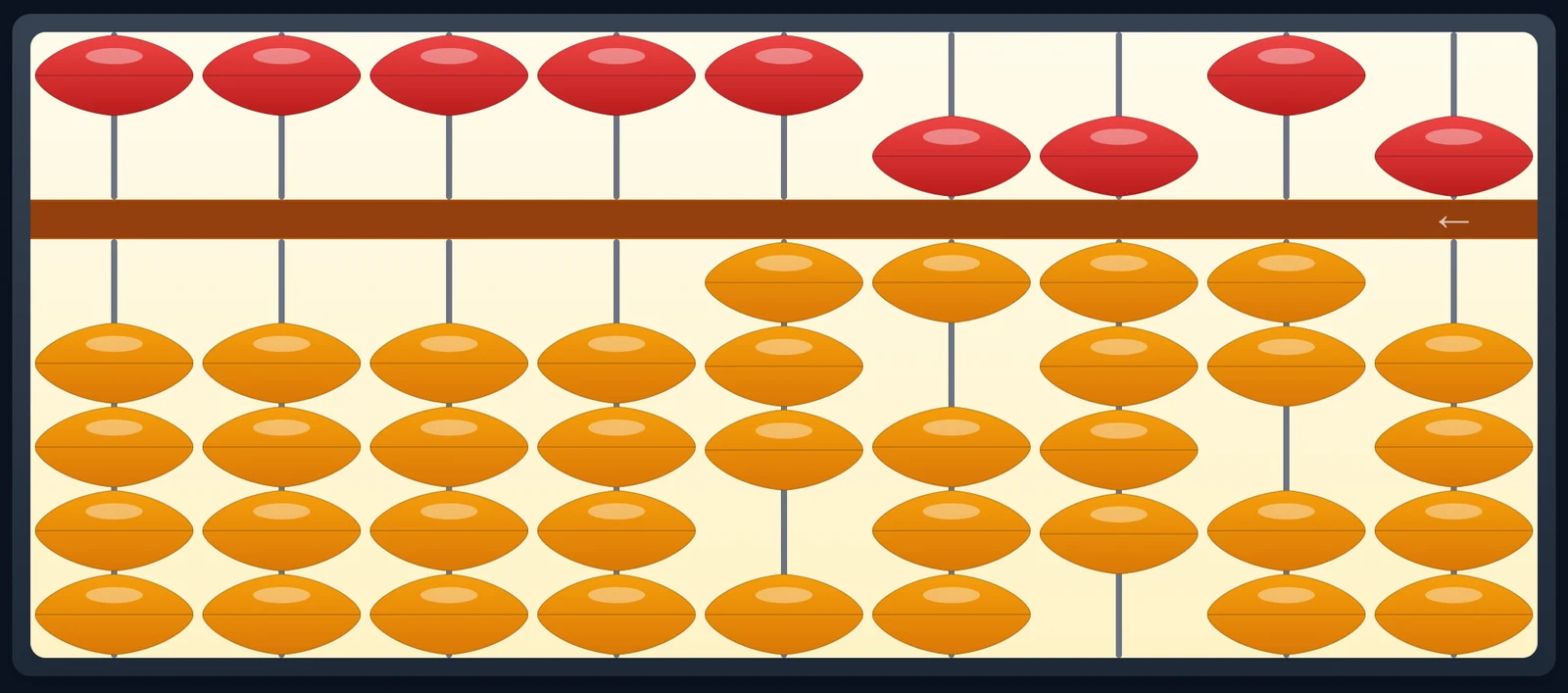
A child trained on the abacus does not necessarily treat every bead as a completely independent object. With practice, the child learns familiar configurations, groups, place values and visual patterns.
For example, a bead configuration on one rod already represents a known numerical state. The next rod represents another place value. Another rod adds another part of the structured image.
So a complex abacus representation is not simply “many separate objects that must all be memorised one by one.” It is an organised visual system. That distinction matters.
With training, children learn to recognise familiar abacus configurations as structured visual patterns rather than processing every bead as an unrelated object.
It is better not to call this “photographic memory”
The result can look so impressive that people sometimes describe it as photographic memory. But that term is not necessary and can be misleading. A more accurate description is:
trained visuospatial representation and rapid recognition of familiar structured patterns.
Research on abacus-based mental calculation supports the importance of visuospatial working-memory processes. A five-year training study involving 144 children found that the abacus-trained group outperformed controls on arithmetic and visuospatial working-memory tasks, although not on a general intelligence measure.
That is already a substantial and interesting finding without needing to claim a literal photographic memory.
The scientific picture is promising — but not simplistic
It is also important not to exaggerate. Not every study concludes that mental-abacus training broadly improves every cognitive ability.
A three-year randomized controlled trial involving 204 elementary-school children found that mental-abacus instruction improved arithmetic performance, but did not produce general changes in basic cognitive abilities. The study also found that children with stronger spatial working memory at the beginning tended to learn mental-abacus skills more successfully.
A broader 2020 review concluded that abacus-based mental-calculation training shows potential benefits for mathematics, working memory and numerical processing, while also warning that broader transfer claims should be made cautiously.
This is the right way to understand the evidence:
mental-abacus training is a demanding visuospatial calculation skill with documented links to arithmetic and visuospatial processes, but it should not be presented as a magical method that automatically improves every aspect of intelligence.
Abacus training turns visual complexity into structure
At first, a child may work with one rod. Then two. Three. Four. Five. Now the mental representation contains several place values at once.
And while that structure is being maintained, the next number arrives. The configuration changes. Then changes again. At higher speeds, this happens continuously.
This is where the importance of earlier automaticity becomes especially clear.
The child should not mentally count every bead
If a child needs to count internally — one, two, three, four — every time a configuration appears, high-speed mental calculation will not develop.
The child needs to recognise familiar configurations as units. The same way an adult usually recognises the number of fingers on one hand as a familiar structure rather than consciously counting each finger.
Flashcards help develop this transition
This is one reason flashcards are useful. At first, the configuration can be shown slowly. The child has time to inspect it. Then the display becomes shorter. Then shorter again.
Eventually, there is no time to count individual elements one by one. The child needs to recognise the configuration as a whole. That is valuable preparation for mental calculation.
Recognition is only the first stage
In real mental calculation, the child must do more than recognise the incoming number. They need to:
- recognise it quickly;
- identify the required operation;
- apply the correct rule;
- update the mental abacus;
- retain the new image;
- receive the next number.
And repeat this sequence again and again. So speed in mental arithmetic is the result of several coordinated processes becoming increasingly efficient.
Why increasing speed too early creates problems
If basic reactions are still unstable, higher speed can destroy accuracy. The child begins to rush, hesitate, guess, lose the image and make unnecessary mistakes.
So a more reliable progression is: stable technique; high accuracy; confident pattern recognition; then gradually shorter time intervals.
Speed should expose automaticity. It should not be used to replace it.
How do you know a topic is becoming automatic?
There are several practical signs. The child:
- no longer pauses for a long time;
- rarely asks for prompts;
- performs the topic consistently;
- keeps the skill inside mixed exercises;
- can increase speed slightly without a dramatic accuracy drop;
- still performs the rule correctly after time has passed.
Those are much stronger indicators than simply saying “We finished this topic last month” — and they are exactly what to look at when measuring a child’s progress.
Mixed practice is one of the best tests
If a child receives 50 almost identical examples, they quickly understand: “I need to use the same rule every time.” That does not fully test automatic recognition.
Mixed practice is more demanding. One operation requires one rule. The next requires another. Then a third. Now the child must not only execute the action. They must first identify:
Which action is required right now?
Automaticity becomes much easier to see.
Multiple place values raise the challenge again
With multi-digit numbers, different rules may appear within a single operation. One place value may use a simple movement. Another may require a Small Friend. Another may require a Big Friend.
The child must process these within one connected calculation. If the basic patterns are still slow and unstable, performance falls quickly.
Automaticity is the bridge to advanced mental arithmetic
Without it, it becomes very difficult to progress toward high-speed Anzan, multi-digit numbers, long chains, multiplication and division and advanced mental calculation.
Advanced performance is built from simple operations that no longer feel difficult.
How Amavit can support automaticity
This is where targeted practice becomes particularly useful. In Amavit, the teacher can adjust practice by topic, speed, digit length, chain length, training volume and mixed-topic structure.
A weak topic can appear more frequently. A well-established older topic can appear less frequently — but does not need to disappear completely. If an old skill begins to weaken, its frequency can be increased again.
So repetition becomes not merely more practice but more appropriate practice.
The goal is not maximum repetition. The goal is the right repetition.
Automaticity frees the child for the next level
This is probably the most important point. The purpose of automaticity is not simply “to calculate faster.” Its deeper purpose is to free cognitive resources for more difficult work.
When a basic rule no longer requires a long conscious decision, the child has more capacity available for:
- maintaining the mental image;
- handling several place values;
- following a long chain;
- learning a new algorithm;
- working at higher speed.
In other words:
Automaticity at one level creates room for complexity at the next.
The main conclusion
In mental arithmetic, understanding a rule is not enough. The child needs enough correct repetition across enough different situations for the response to become increasingly automatic.
Because the program keeps becoming more complex. First there are a few rules. Then many familiar combinations. Then multiple place values, mixed topics, mental abacus, long chains and higher speed.
At an advanced level, there is simply not enough time to consciously reconsider every small operation separately. That is why the learning progression should be:
understand → perform correctly → repeat → automate → increase speed → increase complexity
And the stronger the previous level becomes, the easier it is for the child to build the next one.
Research references
- Vogel S. E., De Smedt B. (2021). Developmental brain dynamics of numerical and arithmetic abilities. npj Science of Learning, 6.
- Wang C. et al. (2019). Training on Abacus-Based Mental Calculation Enhances Visuospatial Working Memory in Children. Journal of Neuroscience, 39(33), 6439–6448.
- Barner D. et al. (2016). Learning Mathematics in a Visuospatial Format: A Randomized, Controlled Trial of Mental Abacus Instruction. Child Development, 87(4), 1146–1158.
- Wang C. (2020). A Review of the Effects of Abacus Training on Cognitive Functions and Neural Systems in Humans. Frontiers in Neuroscience, 14, 913.
Frequently asked questions
Why is repetition necessary in mental arithmetic if the child already understands the rule?
Because understanding and automatic performance are different stages. Repetition helps a correctly learned rule become fast and stable enough to use inside more complex calculations.
What does automaticity mean in mental arithmetic?
It means that a familiar calculation pattern can be recognised and performed with very little deliberate decision-making.
Why does automaticity become more important with multi-digit numbers?
Because several place values and different rules may need to be processed within the same operation while the child maintains the current mental-abacus state.
Does mental-abacus training improve memory?
Research has found associations and training effects involving visuospatial working memory and arithmetic performance, but broader claims about general intelligence or universal cognitive improvement are not consistently supported.
What is subitizing?
Subitizing is the rapid and accurate recognition of a very small number of objects without counting, typically around three to four items.
Is “photographic memory” the right term for advanced mental-abacus students?
It is more accurate to describe the skill in terms of trained visuospatial representation and rapid recognition of familiar structured patterns.
Free for teachers